
Joe Henley had never performed a proper professional gig before joining The Voice, yet the 19-year-old Alabama singer has already accomplished something that many aspiring country artists would consider extraordinary. His traditional country voice has attracted praise from legendary singer Randy Travis, earned standing ovations from all four coaches, and inspired fans to campaign for his success. Now, with Season 30 moving closer to its December 14 finale, Henley faces a new challenge: turning that early recognition into lasting momentum.
For someone who entered the competition with limited professional stage experience, the attention represents a remarkable change. Henley is no longer simply a young singer from Grand Bay, Alabama, performing songs he loves. He is a nationally televised contestant whose performances are being evaluated by established musicians and viewers across the country.
But what makes his story particularly interesting is the kind of music that has brought him this far.
At a time when modern country music frequently incorporates elements of pop, rock, and other genres, Henley has established himself through songs associated with traditional country storytelling. His choices have included Travis Tritt’s “Anymore” and Keith Whitley’s “Don’t Close Your Eyes,” both of which demand emotional expression rather than elaborate production.
That musical identity has helped distinguish him from contestants with very different vocal styles.
It has also made the reported recognition from Randy Travis especially meaningful.
Travis is one of the defining voices of traditional country music, known for recordings such as “Forever and Ever, Amen,” “Three Wooden Crosses,” and “On the Other Hand.” His career helped bring a more traditional country sound back into prominence during the 1980s.
For a young performer whose musical influences appear closely connected to that tradition, receiving praise from an artist of Travis’s stature is a significant moment.
The precise details of Travis’s comments were not included in the account of Henley’s latest fan appeal, but the recognition itself adds another dimension to the contestant’s growing profile.
It suggests that his performances have attracted attention beyond the immediate audience of The Voice.
That does not guarantee a recording contract, a successful career, or even a place in the finale. But it does demonstrate how a national singing competition can introduce an emerging performer to people who might otherwise never encounter his music.
Henley’s journey began with a Blind Audition that immediately established his musical direction.
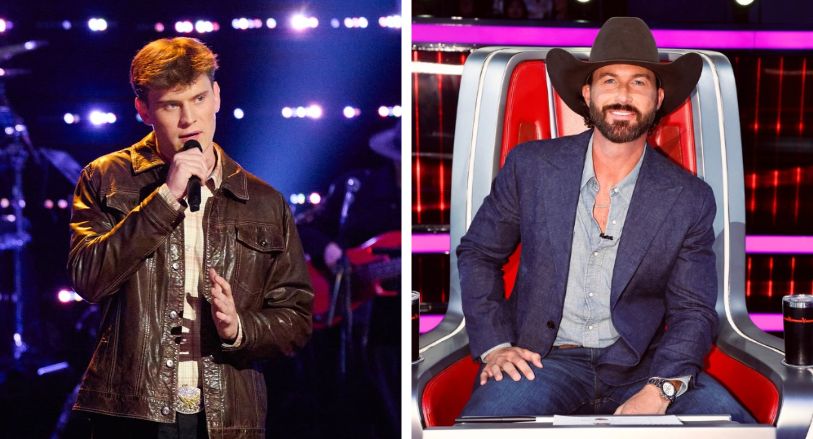
He performed Travis Tritt’s “Anymore,” earning chair turns from both Kelly Clarkson and Riley Green. The response gave him an opportunity to choose between two established artists with different musical backgrounds.
Henley ultimately joined Team Riley.
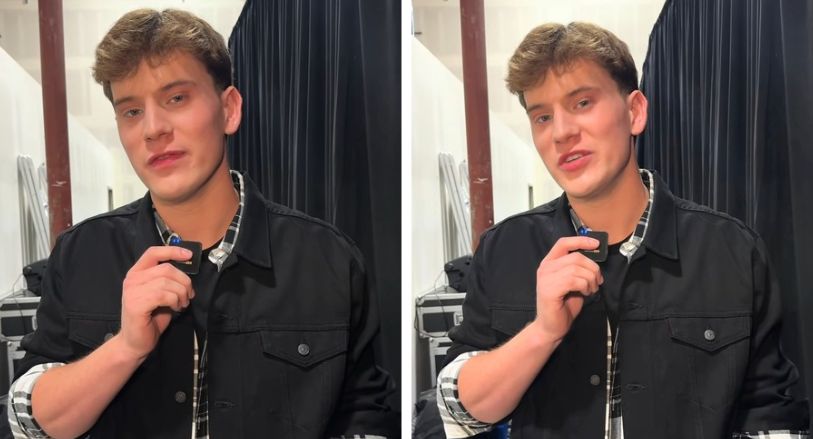
The decision made sense for a singer whose musical interests were rooted in country music. Green, also from Alabama, offered both a shared regional connection and professional experience in the genre Henley wanted to represent.
Their partnership soon became an important part of his development.
During the Battles, Henley competed against Kenna Elpers and advanced to the next round. He then faced another significant challenge during Cut Week, when Green had to decide which contestants deserved places in the Live Shows.
Henley chose Keith Whitley’s “Don’t Close Your Eyes,” a song that requires careful phrasing and convincing emotional delivery.
The performance became one of his most important moments in the competition.
All four coaches gave him a standing ovation, and Clarkson was particularly enthusiastic about his potential. She even suggested that she would be surprised if Henley failed to reach the finale.
That was an extraordinary expression of confidence in a young singer who had not arrived with extensive professional experience.
But praise from the coaches is only one part of succeeding on The Voice.
As the competition moves into the Live Shows, contestants increasingly depend on public support. An artist can deliver a performance that impresses the coaches and still face elimination if viewers do not vote.
Henley appeared to recognize that reality ahead of the November 16 episode.
He shared a direct message with supporters on social media, reminding them that voting was open and explaining how they could participate.
Fans were encouraged to text his name to the show’s designated voting number or comment on the pinned voting post on NBC’s official The Voice TikTok account.
The message was straightforward, but its timing was important.
Seven artists from Team Kelly Clarkson and Team Riley Green were competing for just five remaining places in the Top 10. Unlike the previous week’s Live Show, which featured one elimination, the November 16 episode would send two contestants home.
For Henley, the stakes were considerable.
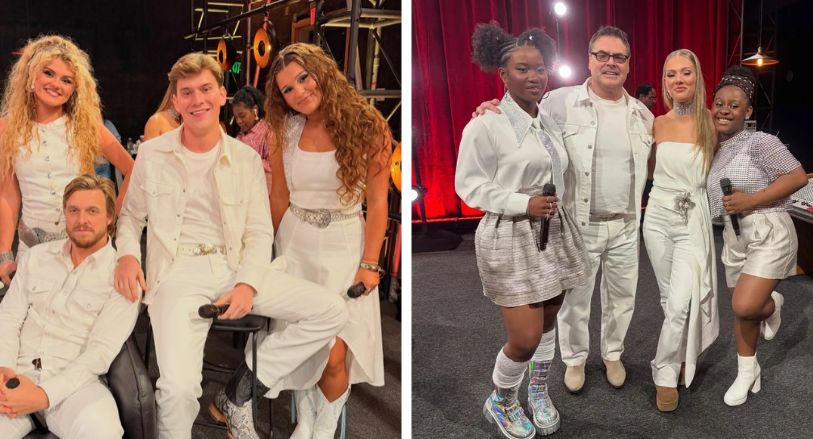
He was competing alongside fellow Team Riley artists Cade Mower and sister duo Ferryn & Brinkley. Team Kelly’s lineup included Koumba Diallo, Anna McElroy, Brianna Cameron, and Kyle Davis.
With only five places available, even a strong performance could not guarantee advancement.
Henley’s supporters responded enthusiastically to his voting appeal.
Some promised to vote for him, while others openly predicted that he could win the entire competition. One fan declared that Henley had been their choice to win, while another expressed excitement about hearing him perform again.
Those comments reflected strong enthusiasm among the viewers responding to his post.
However, individual social media reactions do not necessarily represent the opinions of the entire voting audience. They demonstrate visible support, but they cannot establish how many people ultimately voted or whether Henley was leading the competition.
Still, the encouragement matters for a young artist facing the pressure of live television.
Unlike earlier rounds, where coaches had substantial influence over the results, public voting introduces a different challenge. Contestants must connect with viewers who may have very different musical preferences.
For a traditional country singer, that can create both opportunities and limitations.
Country music has a devoted audience, and Henley’s style may appeal strongly to viewers who appreciate classic songs and recognizable vocal character.
At the same time, The Voice attracts listeners across multiple genres. Henley must compete against pop, soul, rock, and other performers who may connect with different sections of the audience.
That makes his ability to communicate emotion particularly important.
A viewer does not necessarily need to be a devoted country music fan to appreciate a convincing performance. A memorable voice and a well-delivered song can create a connection across musical preferences.
Henley demonstrated that possibility during Cut Week, when his Keith Whitley performance impressed coaches whose careers span different genres.
His November 16 performance provided another opportunity to reach a broader audience.
Closing the second Y2K-themed Live Show, Henley performed Lee Ann Womack’s “I Hope You Dance.” The song offered a different emotional perspective from the heartbreak-centered material he had previously performed.
Instead of focusing on romantic pain, the recording is associated with encouragement, hope, and the importance of embracing life’s opportunities.
For a 19-year-old contestant whose own life has changed considerably since joining the competition, the song carried an interesting thematic connection.
Henley had entered The Voice without the kind of professional performance history that some competitors possess. Now he was singing about taking chances while experiencing one of the biggest opportunities of his young life.
Riley Green praised the performance and highlighted Henley’s natural talent and continued improvement.
The public vote also went his way.
Henley advanced into the Top 10 alongside Ferryn & Brinkley, while Cade Mower was eliminated from Team Riley. Anna McElroy from Team Kelly also left the competition.
The result gave Henley another opportunity to continue his journey toward the finale.
But it also demonstrated how quickly the field was narrowing.
With only 10 acts remaining, every contestant faces increasing pressure to deliver memorable performances and maintain public support.
The next scheduled challenge, Dolly Parton Tribute Night on November 23, could be particularly interesting for Henley.
Parton’s catalog is deeply connected to the traditional country storytelling that has shaped his musical identity. Her songs explore heartbreak, family, personal struggle, resilience, and hope, often through direct and emotionally expressive lyrics.
That could offer Henley an opportunity to build on the qualities that have earned him praise throughout the season.
However, performing a familiar country song does not automatically guarantee success. The challenge will be finding an interpretation that respects the original material while revealing something distinctive about his own voice.
In my view, Henley’s greatest strength may be the clarity of his musical identity.
He has not needed to reinvent himself dramatically from one round to the next. Instead, he has continued exploring a traditional country sound that appears natural to him.
That consistency can help audiences understand what kind of artist they are supporting.
But as the competition intensifies, Henley will also need to demonstrate versatility and continued growth. A recognizable style can attract fans, yet each new performance must offer a reason for viewers to keep paying attention.
The recognition from Randy Travis, the praise from the coaches, and the enthusiasm of his supporters have all contributed to an encouraging start.
None of those achievements, however, can replace the importance of delivering another strong performance when voting begins.
For Henley, the coming weeks represent an opportunity to discover whether the attention he has received can develop into something more lasting.
Even if he does not win Season 30, appearing on national television has already introduced his voice to an audience far beyond his hometown.
And for a singer who had never played a proper professional gig before the competition, that is a significant achievement in itself.
The question now is how far he can take it.
Could Joe Henley’s traditional country sound and growing support carry him all the way to The Voice finale? Or will the increasingly competitive Live Shows demand something different from the young Alabama singer?


