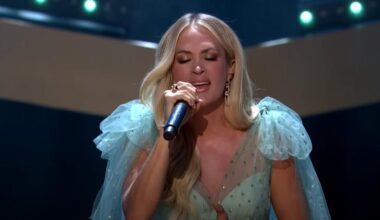
Carrie Underwood has performed before enormous concert crowds, collected major music awards, and built a career around one of country music’s most recognizable voices. But on Sunday, November 15, the singer appeared in a very different setting. Instead of standing beneath the lights of an arena, she joined the worship team at Rolling Hills Community Church in Franklin, Tennessee, singing alongside fellow church members during a regular Sunday service.
Videos from the gathering have since circulated online, offering a glimpse of Underwood participating in worship rather than delivering the kind of polished concert performance audiences usually associate with her. The recordings feature three different songs, including a traditional hymn that connects her latest appearance to a much older chapter of Christian music.
What makes the moment especially interesting is that Underwood’s connection to religious music is hardly new. Long before this particular Sunday service, she had made faith an important part of her public musical identity, even recording an entire gospel album and performing hymns at Nashville’s historic Ryman Auditorium.
Yet seeing her sing in a local congregation brings that connection into a more personal setting.
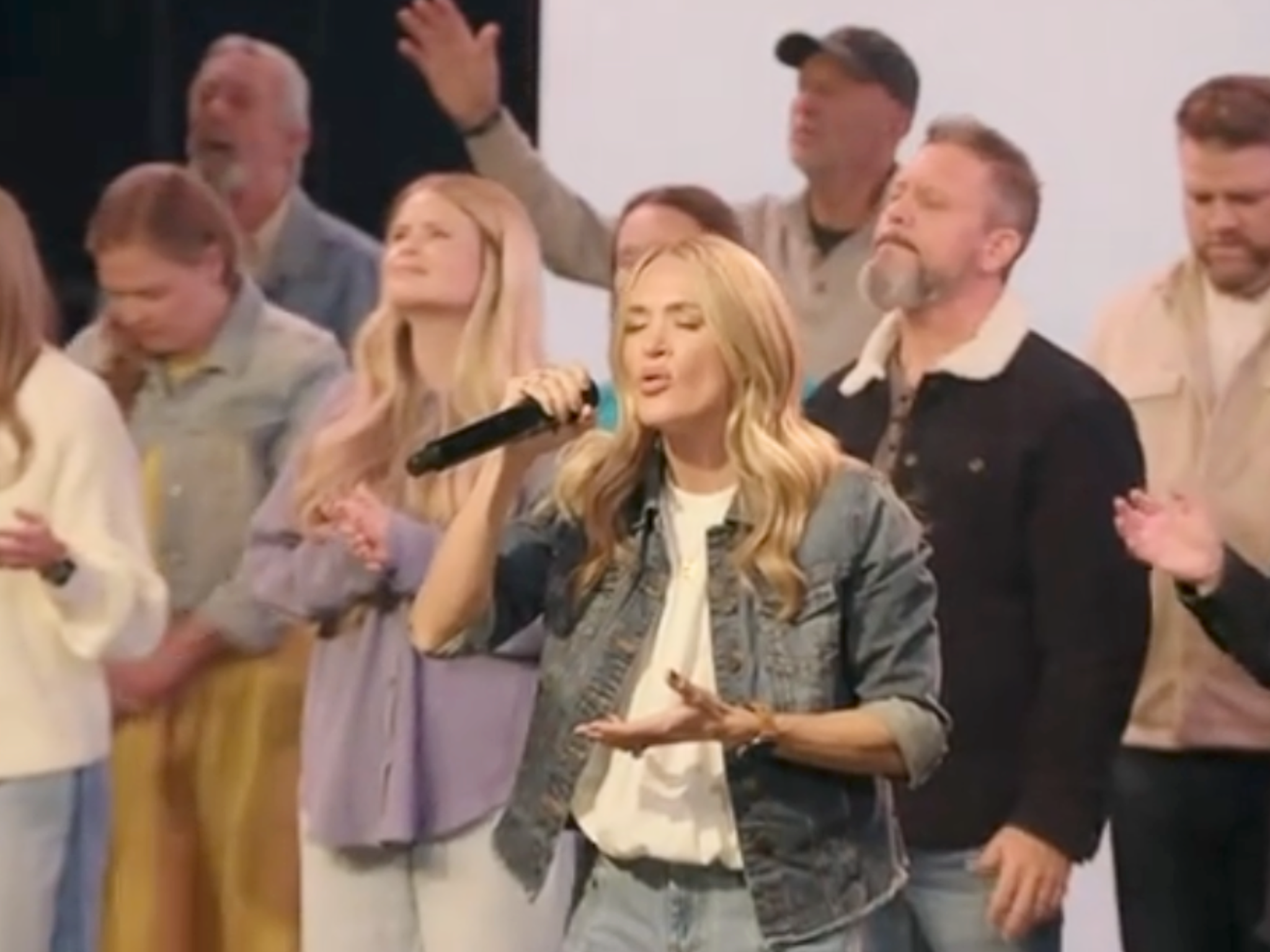
During the November 15 service, Underwood participated in a performance of “The Blessing,” the contemporary worship song associated with Elevation Worship, Kari Jobe, and Cody Carnes. First released in 2020, the song became widely recognized in Christian worship communities for its message of encouragement, protection, and hope.
Unlike many of Underwood’s best-known country hits, the song is designed for congregational participation. Its repeated phrases allow worshippers to join together, placing emphasis on a shared experience rather than an individual singer’s vocal performance.
That distinction changes the context in which her voice is heard.
On a concert stage, audiences generally expect Underwood to command attention. Her ability to deliver demanding melodies and powerful vocal climaxes has been central to her career since she first became widely known through American Idol.
In church, however, the purpose of the music is different. The singer is participating in an act of worship alongside others, rather than presenting a performance built primarily around her own celebrity.
The available clips show Underwood singing with other members of the praise team before the church’s senior pastor delivered his sermon. Although the recordings provide only brief glimpses of the service, they offer a look at how she participates in the musical life of her congregation.
Another video features her singing “‘Tis So Sweet to Trust in Jesus,” a hymn first published in 1882.
The song has remained familiar to generations of Christian worshippers, with its lyrics expressing confidence in faith through life’s uncertainties. Its enduring presence in churches makes it a very different selection from contemporary country or pop music.
For Underwood, however, traditional hymns have long been part of her repertoire.
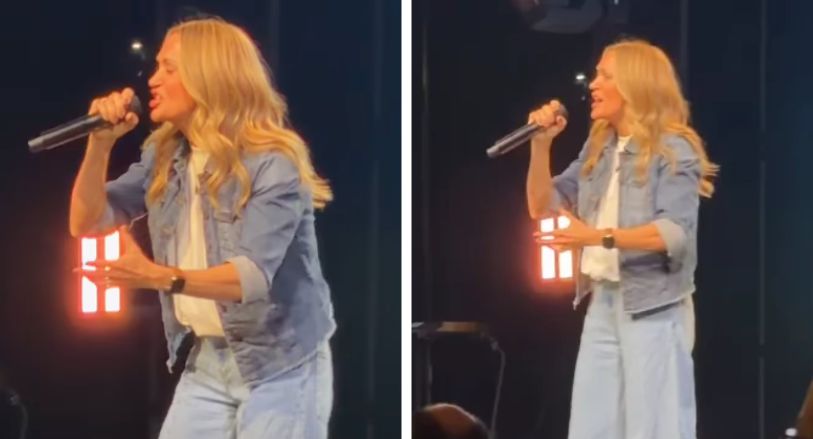
In 2021, she released My Savior, an album devoted to gospel standards and familiar Christian songs. The project included recordings of hymns such as “Amazing Grace,” “How Great Thou Art,” and “Great Is Thy Faithfulness.”
The album represented a deliberate departure from the commercial country music that had made her famous. Rather than focusing on radio-oriented singles, Underwood chose material rooted in the music she had known throughout her life.
Her decision also demonstrated that religious music was more than an occasional addition to her concert performances.
She was willing to devote a major recording project to songs associated with worship and personal faith.
That commitment became especially visible when she performed selections from My Savior at Nashville’s Ryman Auditorium during an Easter Sunday livestream.
The concert, titled My Savior: Live From the Ryman, was presented as a special celebration of gospel music. According to Underwood’s official website, the virtual event raised more than $112,000 for Save the Children.
The performance connected her musical career with a charitable initiative, showing how she could use her public platform to support a cause beyond the entertainment industry.
Her latest appearance at Rolling Hills Community Church operates on a much smaller scale, but it reflects the same connection between her musical abilities and her religious beliefs.
Instead of presenting an album release or a major televised performance, Underwood joined a local worship team for a Sunday service.
That difference is part of what makes the videos noteworthy.
Celebrities frequently appear in public settings where their presence becomes the main attraction. A red carpet, awards ceremony, or concert is generally organized around performers and their work.
A church service has a different purpose, even when a famous singer is participating.
Underwood’s appearance was part of the congregation’s regular worship activities, and the videos show her sharing the musical responsibilities with other members of the team.
The third clip from the service features “I Know a Name,” a contemporary worship song associated with Brandon Lake and Elevation Worship.
Together, the three selections demonstrate a range of Christian musical traditions.
“The Blessing” represents modern congregational worship, while “‘Tis So Sweet to Trust in Jesus” connects the service to the nineteenth-century hymn tradition. “I Know a Name” adds another contemporary selection to the program.
For a singer known for moving between country, pop, and gospel influences, that variety is not particularly surprising.
Underwood has demonstrated throughout her career that her vocal abilities can adapt to different musical styles. But the church recordings offer an opportunity to hear those abilities in a setting where the songs’ religious meaning is central.
Her participation also reflects a longer relationship with Rolling Hills Community Church.
The November 15 service was not described as her first appearance with the congregation. Underwood has occasionally joined the church’s worship team, meaning this latest performance continues an existing practice rather than marking an entirely new direction.
That detail matters because it distinguishes the event from a one-time celebrity visit.
She was not simply making a special appearance at an unfamiliar church. She was participating in a worship setting where she has previously shared her musical talents.
For fans who primarily know Underwood through her country hits, this may be a less familiar side of her life.
Her mainstream career includes songs associated with heartbreak, determination, romance, and personal resilience. Recordings such as “Before He Cheats,” “Jesus, Take the Wheel,” and “Blown Away” helped establish her as a major country music performer.
“Jesus, Take the Wheel,” in particular, demonstrated early in her career that religious themes could appear naturally within her commercial music.
The song became one of her signature recordings, combining a country narrative with a message about faith and surrender during a difficult moment.
That connection helps explain why her later gospel projects did not represent a complete break from her established musical identity.
Instead, they brought an existing element of her artistry into sharper focus.
There is also an interesting contrast between the vocal demands of her country performances and the musical approach often used during congregational worship.
Underwood is famous for her ability to sustain powerful notes and deliver dramatic performances. Those qualities can be effective in gospel music, particularly during emotionally intense moments.
But worship songs also invite a different kind of musical sensitivity.

A singer must consider how their voice fits within a group, how the congregation participates, and how the arrangement supports the purpose of the gathering.
The videos from November 15 do not provide enough information to evaluate every musical detail of the service. Still, they clearly show Underwood participating alongside other singers rather than appearing as the sole featured performer.
That shared setting is central to the appeal of the recordings.
It allows viewers to see a major entertainer taking part in an activity that is meaningful to her outside the usual demands of the music industry.
Of course, a few short videos cannot provide a complete picture of anyone’s private spiritual life. Underwood has spoken publicly about her faith through her music, but the recordings should be understood as glimpses of one church service rather than evidence of every aspect of her personal beliefs.
What they do demonstrate is that she continues to make time for religious music in a community setting.
And that consistency may be more significant than any individual vocal moment captured on camera.
In my view, the most compelling aspect of Underwood’s church appearance is not the novelty of hearing a famous singer perform a hymn. It is the continuity between the music she has chosen to record professionally and the songs she continues to sing as part of worship.
Her gospel album, the Ryman livestream, and her occasional appearances with the Rolling Hills worship team all point to an enduring interest in Christian music.
The scale of those performances may differ dramatically, but the musical tradition connecting them remains recognizable.
For some fans, the church videos may offer a welcome reminder that an artist’s life can include meaningful musical experiences beyond commercial releases and major performances.
For others, the appeal may simply be hearing Underwood’s powerful voice applied to songs they already know from their own worship experiences.
Either way, the November 15 recordings provide a different perspective on a singer whose career has been closely followed for more than two decades.
She has already demonstrated what her voice can accomplish on television, in recording studios, and before enormous audiences.
This time, the setting was a Tennessee church, the songs were familiar expressions of Christian faith, and the music was shared with a congregation.
Would you like to hear Carrie Underwood record another full gospel album, or do you prefer hearing her sing traditional hymns in a simple church setting? And which worship song would you most love to hear her perform next?