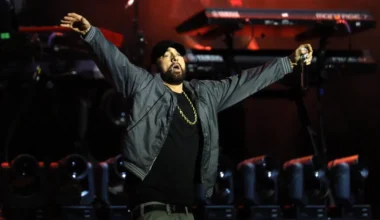
There’s a reason most rising artists avoid covering massive global hits.
The bigger the song, the harsher the comparison.
But that didn’t stop Braden Rumfelt from stepping directly into the spotlight with his own version of Lose Control — one of the most emotionally demanding and recognizable songs dominating listeners worldwide.
What could have easily become another overlooked social media cover quickly transformed into a breakout moment fans can’t stop talking about.
And once Teddy Swims himself appeared to acknowledge the performance, the entire conversation exploded online.
Fans Knew the Risk Immediately
Covering a chart-smashing hit comes with pressure most audiences never think about.
Listeners already know every run, every emotional shift, and every powerful vocal moment. When a song becomes as connected to an artist as “Lose Control” became to Teddy Swims, fans rarely enter with an open mind.
They come expecting disappointment.
That’s why so many viewers were surprised by Rumfelt’s approach.
Instead of trying to imitate Teddy Swims note-for-note, fans felt Rumfelt leaned into something more personal — delivering the emotion of the song through his own voice rather than chasing a perfect replica.
That decision became one of the biggest reasons the performance connected so strongly.
The Internet Started Paying Attention Fast

As clips of the cover spread across social media, reactions began snowballing.
Fans repeatedly described the performance as raw, vulnerable, and emotionally grounded. Many viewers pointed out how difficult it is to preserve the intensity of “Lose Control” without sounding forced or overly polished.
Supporters argued Rumfelt managed to walk that line naturally.
The momentum quickly shifted from people discussing the song itself to people asking about the artist behind the performance.
Who is Braden Rumfelt?
Where did he come from?
What else has he released?
For many listeners, the discovery felt organic — the kind of moment where someone sends a clip with a simple message: “You need to hear this.”
That kind of attention tends to hit differently than traditional promotion.
Then Teddy Swims Entered the Conversation
The moment that truly pushed excitement to another level came when fans noticed acknowledgment from Teddy Swims himself.
For supporters, that interaction carried serious weight.
Getting praise from strangers online is one thing. Catching the attention of the artist behind one of the biggest songs in the world feels entirely different.
Almost instantly, fans began calling the moment a “co-sign,” celebrating the idea of one artist recognizing another instead of fueling competition or comparison.
That energy became a huge part of the story.
Social media reactions flooded in from viewers who said they loved seeing encouragement exchanged between musicians rather than negativity.
Many fans described the interaction as refreshing — proof that authenticity still stands out in an era crowded with viral performances.
Why the Cover Resonated So Deeply
The reaction surrounding Rumfelt’s version also revealed something bigger about modern audiences.
Listeners increasingly gravitate toward performances that feel emotionally real rather than technically flawless.
Many comments focused less on vocal perfection and more on emotional connection.
Fans repeatedly said the performance felt invested.
Not over-produced.
Not calculated.
Not designed simply to outperform the original.
Just honest.
That distinction appears to be exactly what resonated.
A Breakthrough Moment Fans Think Could Change Everything
Viral clips appear online every hour.
But supporters believe moments that genuinely shift perception are much rarer.
For Braden Rumfelt, many fans now see this cover as the type of performance that introduces an artist to an entirely new audience — the kind of turning point people look back on later and say, “That was the moment things changed.”
Industry watchers often describe breakthrough moments the same way:
A performance lands.
People react.
Someone influential notices.
Then audiences start paying attention differently.
As clips continue circulating and conversations keep growing, supporters increasingly believe Rumfelt may have crossed into that territory.
Because according to fans, he didn’t cover “Lose Control” to prove he could sound like Teddy Swims.
He did something far more difficult.
He made people stop and hear his own voice.