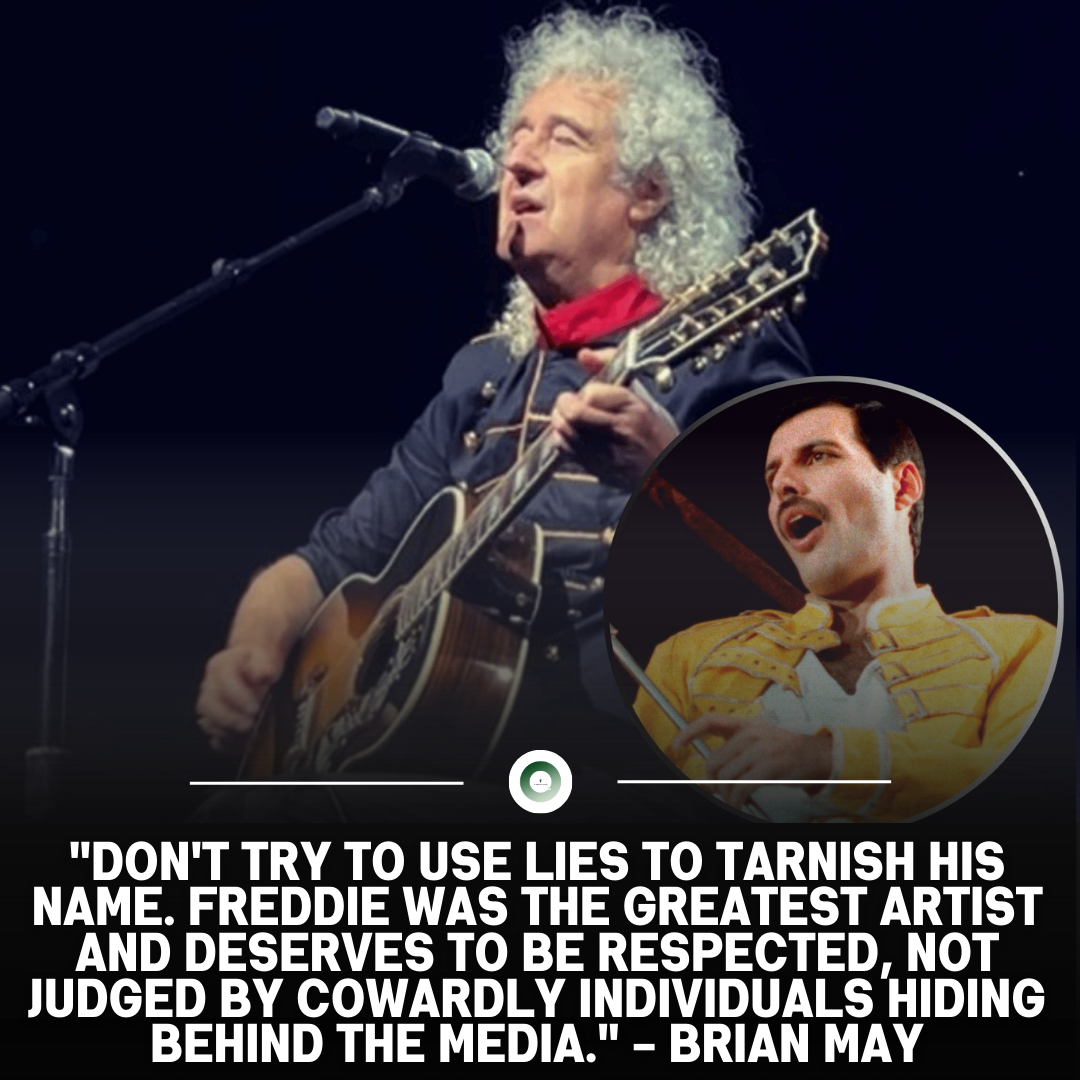
“Don’t try to use lies to tarnish his name. Freddie was the greatest artist and deserves to be respected.”
— Brian May
When Freddie Mercury died in November 1991, the world didn’t just lose a singer. It lost a force of nature. His voice had reshaped rock music, his presence had redefined performance itself, and his refusal to conform had made him unforgettable. Fans across the globe mourned deeply, recognizing that someone irreplaceable was gone.
But before the grief had time to settle, something else emerged.
Not tribute.
Exploitation.
When Grief Became a Headline Opportunity
In the early 1990s, public understanding of HIV/AIDS was shaped more by fear than by compassion. Ignorance filled the gaps where empathy should have lived. And certain tabloids saw an opportunity—not to honor Freddie Mercury, but to reduce him.
Publications like The Sun began publishing stories that shifted focus away from his music and toward sensationalized narratives. Instead of celebrating his artistry, they dissected his personal life. Instead of preserving his dignity, they questioned his character.
The man who had given the world Bohemian Rhapsody, We Are the Champions, and Somebody to Love was suddenly being portrayed not as a genius, but as a cautionary tale.
For those who knew him, it felt deeply personal.
For Brian May, it felt unforgivable.
Brian May Refused to Stay Silent
Brian May had stood beside Freddie Mercury for over two decades. He had watched him build Queen from uncertainty into legend. He had witnessed his discipline, his courage, and his relentless pursuit of creative perfection.
And he refused to let tabloids rewrite that truth.
In interviews, May spoke with unusual directness, condemning the coverage as cruel and dehumanizing. He rejected the narrative that Freddie should be defined by illness or judged through the lens of scandal.
Freddie Mercury, he insisted, was not a victim.
He was a fighter.
He was an artist who lived fully and created fearlessly, even when his body began to fail him.
The Moment That Defined His Final Strength
Nothing symbolized that courage more than The Show Must Go On.
By the time Queen recorded the track, Freddie was already gravely ill. His physical strength was fading, and even standing had become difficult. Brian May remembered wondering whether Freddie could deliver the demanding vocal performance the song required.
Freddie’s response was simple.
He took a drink, stepped forward, and sang.
What followed stunned everyone in the room. His voice carried the same power, the same intensity, the same unbreakable spirit. There was no hesitation. No weakness. Only resolve.
In that moment, Freddie Mercury wasn’t retreating from the world.
He was defying it.
For Brian May, this was the truth tabloids ignored. Not decline—but defiance.
Not tragedy—but courage.
Turning Pain Into Purpose
The fight to protect Freddie’s legacy didn’t end with interviews. Brian May, Roger Taylor, and Queen’s management transformed their grief into action by establishing the Mercury Phoenix Trust.
The organization became one of the most influential HIV/AIDS charities in the world, funding awareness, treatment, and support programs across continents. Instead of allowing Freddie’s death to become a symbol of judgment, they made it a catalyst for compassion.
They refused to let his story be reduced.
They ensured it would create change.
Protecting the Truth for Future Generations
Brian May understood something fundamental. If lies were left unchallenged, they would eventually become accepted history. So he continued defending Freddie—not just in words, but in how his story was preserved.
Years later, Bohemian Rhapsody reintroduced Freddie Mercury to millions, showing not just the icon, but the human being behind the legend. A man who was complex. Brilliant. Vulnerable. And unshakably himself.
Brian May’s loyalty never wavered.
Because he wasn’t protecting an image.
He was protecting the truth.
Freddie Mercury was never defined by headlines.
He was defined by his courage. His voice. And the unbreakable will that carried him to the very end.
And thanks to Brian May’s refusal to stay silent, the world remembers him not as tabloids tried to portray him—
But as what he truly was.
One of the greatest artists who ever lived.