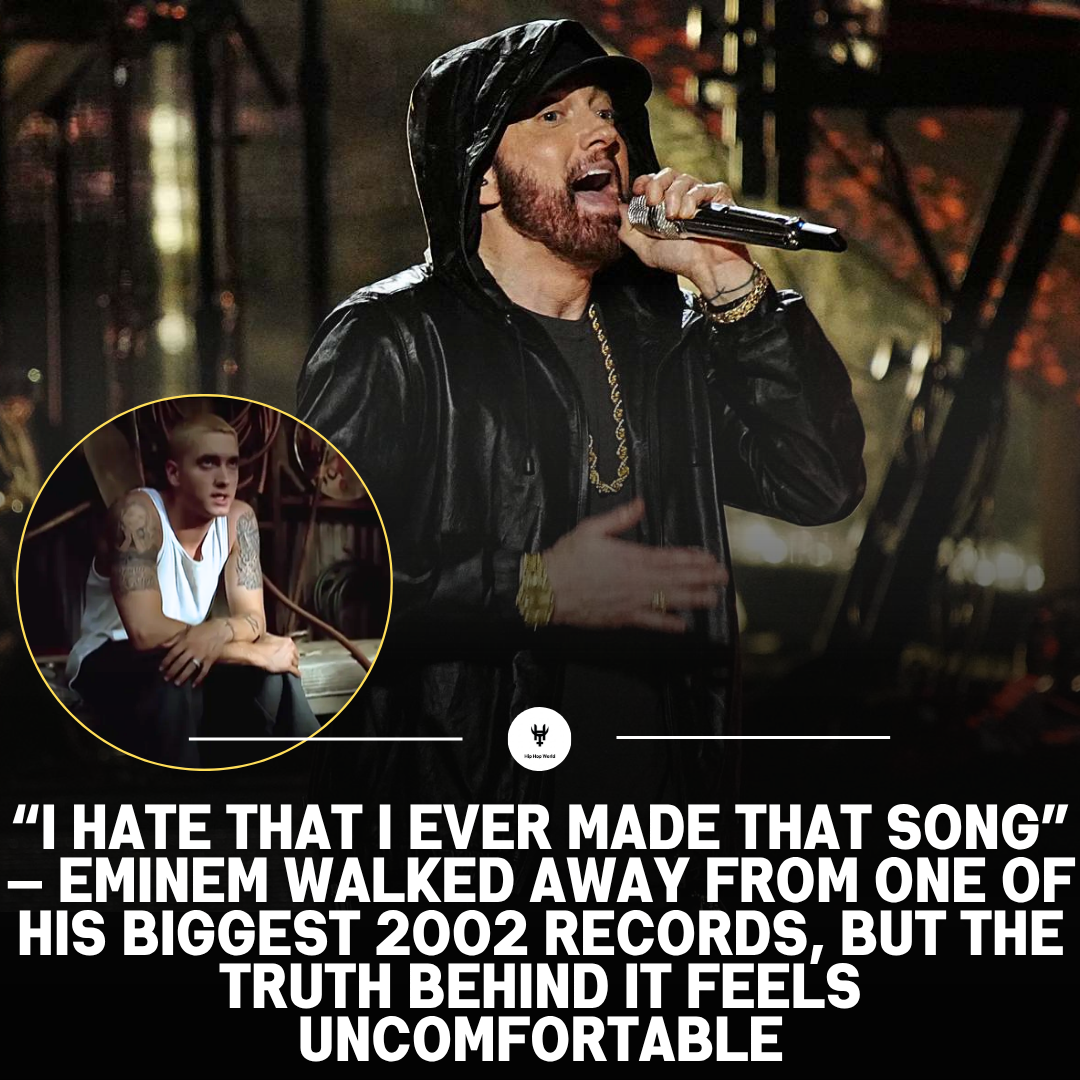
In 2002, Eminem wasn’t just dominating charts—he was redefining what mainstream hip-hop could say out loud. At the center of that storm stood Cleanin’ Out My Closet, a track that didn’t ease listeners in or soften its edges. It confronted. It accused. It exposed.
The song was raw in a way few artists dared to be. Built on years of frustration and personal conflict, it turned a deeply private relationship into something public and permanent. Fans didn’t just hear it—they felt it. And that honesty, as uncomfortable as it was, became part of what made Eminem impossible to ignore.
A Story That Didn’t Stay Frozen
For years, the track stood as one of his defining statements. It wasn’t just a hit—it was a reflection of who he was at that time. Angry. Defensive. Unapologetically direct. It found its way into performances, playlists, and conversations about the limits of artistic expression.
But time has a way of shifting even the strongest emotions.
As the years passed, the intensity that once fueled the record began to lose its grip. What had once felt necessary started to feel distant. Not because the past had changed—but because he had. The same words that once carried release began to carry weight.
And eventually, that weight became impossible to ignore.
The Decision No One Expected
In 2013, everything shifted.
On Headlights, Eminem did something that stood in direct contrast to his earlier work. Instead of revisiting anger, he approached the same relationship with clarity—and something closer to peace. The tone wasn’t defensive. It was reflective.
It wasn’t just another song in his catalog. It was a turning point.
And alongside it came a decision that surprised even longtime fans.
“I’m done performing that song forever.”
It wasn’t framed as regret for making Cleanin’ Out My Closet. It was something more specific—and more personal. He no longer felt connected to the version of himself that had written it. Continuing to perform it would mean reliving emotions he had already moved past.
So he stopped.
Letting Go of Something That Worked
Walking away from the track wasn’t a small move.
This wasn’t a forgotten album cut or an overlooked release. It was one of his biggest records. A platinum-selling hit. A staple in live shows. The kind of song artists usually hold onto for life because audiences expect it.
But that wasn’t the point.
For Eminem, the decision wasn’t about what the song had achieved. It was about what it represented. Keeping it in rotation would have meant choosing performance over personal truth—and that wasn’t a trade he was willing to make anymore.
So he removed it. Quietly. Completely.
What Changed—And Why It Matters
The shift didn’t erase his past. It didn’t rewrite the story behind the song or pretend it never existed. Instead, it placed it where it belonged—as part of a specific time, shaped by specific emotions.
What changed was how he chose to carry it forward.
In an industry that often rewards artists for staying exactly who they were when they first broke through, Eminem moved in the opposite direction. He allowed his work to evolve with him—even if that meant leaving some of it behind.
And that choice revealed something rarely seen at that level of fame.
Not reinvention for the sake of image. Not distancing for the sake of controversy.
But a quiet acknowledgment that growth sometimes means stepping away from what once defined you.
The Version He Chose to Become
In the end, the decision wasn’t about a single song.
It was about identity.
About recognizing that not every chapter needs to be revisited. That some moments serve their purpose and then belong in the past. And that staying true to yourself sometimes means letting go of what once made you successful.
Eminem didn’t erase Cleanin’ Out My Closet. He didn’t deny it or hide from it.
He simply chose not to carry it with him anymore.
And in doing that, he made a statement that didn’t need a beat, a hook, or a verse—just a decision.