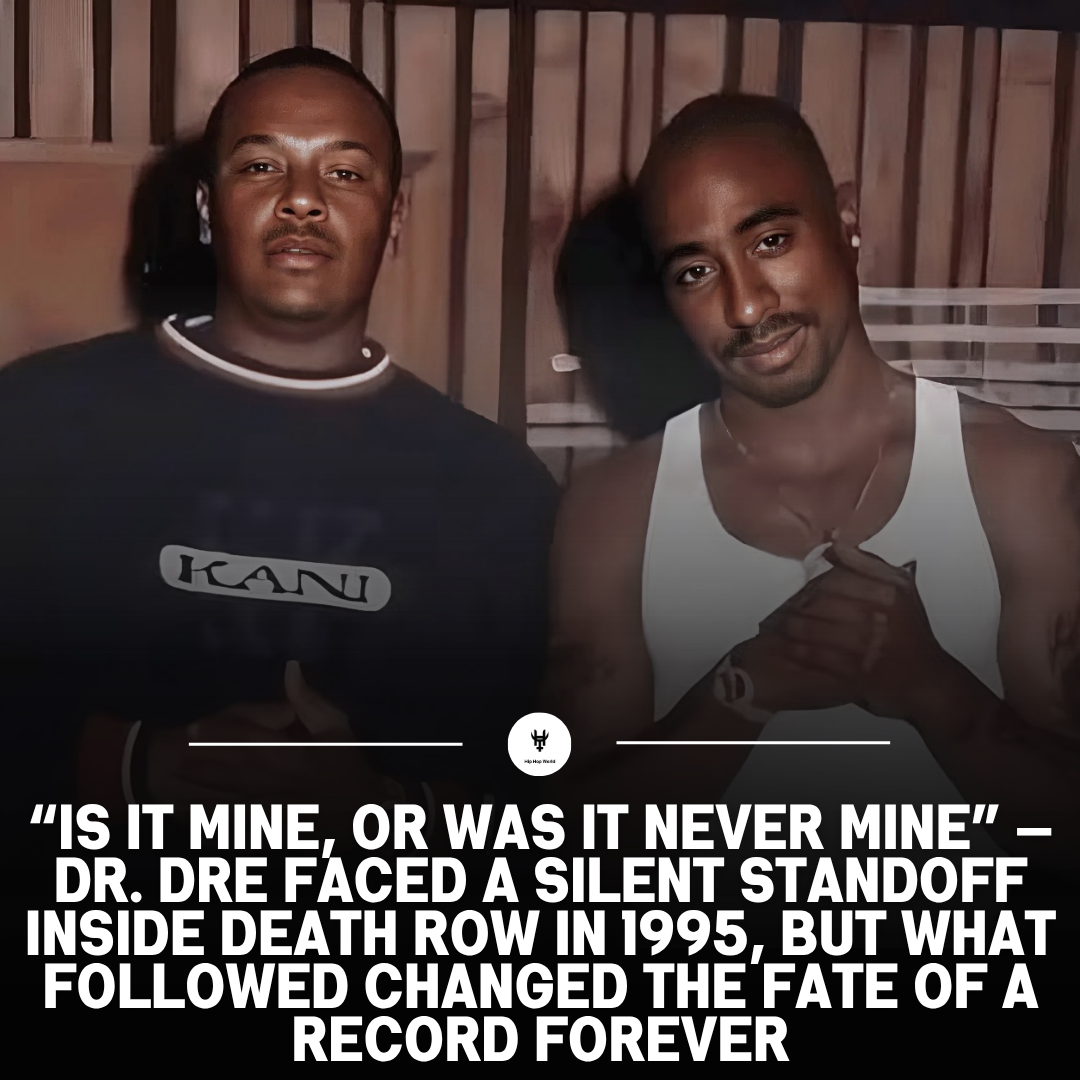
In the final months of 1995, inside the walls of Death Row Records, a record was already taking shape—polished, calculated, and unmistakably Dr. Dre. The beat carried the signature weight of G-funk, layered with the unmistakable talk-box voice of Roger Troutman. It wasn’t just another track. It was meant to be Dre’s statement—his reclaiming moment, quietly built under the working title The Chronic II.
At that point, Dre wasn’t chasing relevance. He was reinforcing dominance.
But the direction of that record—and the fate of that beat—shifted the moment Suge Knight made a decision that would ripple across hip-hop history. When he secured Tupac Shakur’s release from prison with a reported $1.4 million bail, the stakes changed overnight. This wasn’t about patience or album rollouts anymore. It was about impact—immediate and undeniable.
And that beat suddenly had a new purpose.
A Record Reclaimed Under Pressure
The request wasn’t framed as optional. Knight needed a hit that would announce Tupac’s return with force, and Dre’s track was the answer. But for Dre, this wasn’t just another instrumental in rotation—it was his centerpiece. His resistance wasn’t about ego; it was about ownership.
At Death Row, though, ownership rarely followed creative lines.
Reluctantly, the beat was handed over.
That moment marked the turning point—not just for the record, but for everything around it. What had been designed as a solo declaration was now being repurposed into something far bigger, something tied to urgency, timing, and a voice that had been silenced for too long.
Fifteen Minutes That Changed Everything
When Tupac first heard the track, there was no long process, no drawn-out writing sessions. According to multiple accounts, he stepped in and delivered his opening verse in roughly 15 minutes. It wasn’t calculated—it was instinctive.
There’s a difference between writing a verse and releasing something that feels like it’s been waiting to come out. Tupac’s delivery carried that weight. Every line felt immediate, shaped by everything he had just lived through.
Dre’s production was precise. Tupac’s energy was raw.
The collision of the two didn’t dilute the record—it transformed it.
A Song That Redefined Its Owner
When “California Love” was released in December 1995, it didn’t build slowly. It detonated. Within two weeks, it climbed to No. 1 on the Billboard Hot 100, becoming more than just a hit—it became a moment that defined an era.
The track wasn’t just successful; it symbolized something larger. Tupac’s return wasn’t quiet—it was dominant. Death Row wasn’t stabilizing—it was peaking.
The visuals only pushed that further. Directed by Hype Williams, the music video turned Los Angeles into a dystopian empire, amplifying the song’s scale and cementing its place in hip-hop mythology.
Years later, when Dre performed the record during the Super Bowl LVI Halftime Show, the absence of Tupac didn’t diminish the moment. If anything, it reinforced it. The record had outgrown ownership—it had become permanent.
The Cost of Letting Go
But behind the success, there was tension that didn’t fade. The decision to give up that track wasn’t isolated—it reflected a deeper fracture inside Death Row. For Dre, it was part of a growing realization that creative control wasn’t truly his.
By 1996, he walked away.
The departure led to the creation of Aftermath Entertainment, a move that would reshape the industry in ways no one could fully predict. It would eventually open the door to artists like Eminem and 50 Cent—but that chapter started with a moment of frustration.
A moment tied to one song.
When Dre reportedly asked, “Is it mine?”, the question carried more weight than it seemed. The production was his. The structure was his. But the identity of the record had already shifted.
Because once Tupac touched it, the ownership changed in a way that couldn’t be reversed.
Sometimes, the most powerful records aren’t the ones you keep.
They’re the ones you lose—and watch become something bigger than you ever intended.