Kelly Clarkson has already conquered pop music, won American Idol and built a successful television career, but one recent performance has brought an intriguing question back into focus: what would happen if she finally committed to making a full country album?
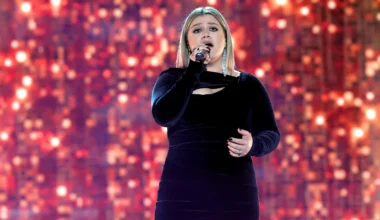
The three-time Grammy winner delivered a powerful interpretation of Ella Langley’s “weren’t for the wind” during the December 3 episode of The Kelly Clarkson Show. The performance attracted attention from listeners, but perhaps the most meaningful reaction came from Langley herself, who responded with one enthusiastic word: “Insane!!!”
For an artist whose song was being reinterpreted by one of the most recognisable voices in contemporary music, that response was a memorable endorsement.
But Clarkson’s performance also highlighted something that has been part of her musical identity for years. Although she became famous as a pop singer, her connection to country music runs much deeper than an occasional television cover.
And that connection makes the growing interest in a country-focused project especially fascinating.
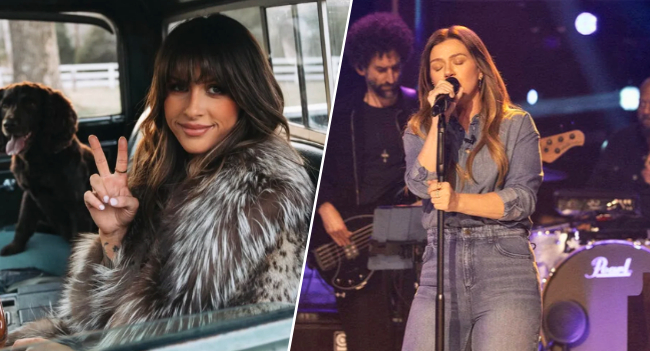
Clarkson first became a household name in 2002 when she won the inaugural season of American Idol. Her victory introduced audiences to a singer whose powerful voice and versatility would eventually support a career spanning multiple musical styles.
Since then, she has released 10 studio albums, earned three Grammy Awards and sold more than 82 million records worldwide, according to the figures cited in the original report.
Her career has included emotional ballads, energetic pop recordings and performances that demonstrate an ability to adapt to different genres without losing her distinctive vocal identity.
Yet country music has remained an important part of that story.
Clarkson grew up in Texas, a state with a particularly strong country music tradition. Her musical background and performances have frequently reflected an appreciation for the genre, even as her biggest commercial successes have often been associated with pop.
She has also worked with country artists throughout her career.
Her duet with Jason Aldean, “Don’t You Wanna Stay,” became a major country hit and demonstrated how naturally her voice could fit alongside an established country performer.
She later collaborated with Vince Gill on “Don’t Rush,” another recording that explored a more traditional country-influenced sound.
Those performances are important because they show that Clarkson’s connection to country music is not simply a recent development prompted by the popularity of Ella Langley.
It is an established part of her musical career.
That history makes her latest Kellyoke performance particularly interesting.
The song she selected, “weren’t for the wind,” comes from Langley’s 2024 deluxe album Still Hungover. Written by Langley alongside Johnny Clawson and Joybeth Taylor, the track explores the emotional uncertainty of someone who struggles to settle down.
Its central theme revolves around restlessness and the difficulty of making lasting romantic promises when the desire for freedom remains strong.
That kind of storytelling has long been an essential part of country music.
Rather than relying entirely on elaborate production, many memorable country songs connect with listeners through recognisable experiences, complicated emotions and direct lyrical narratives.
Langley’s recording reflects that tradition while also fitting into the sound of contemporary country music.
Clarkson’s interpretation offered another perspective on the material.

Her vocal approach is particularly well suited to songs that require emotional intensity. She can move between restrained passages and more powerful moments, giving familiar material a different sense of scale.
That versatility has become one of the defining characteristics of Kellyoke, the recurring musical segment on her daytime talk show.
The format allows Clarkson to perform songs associated with other artists, often crossing between genres that would not normally appear together on a single studio album.
For viewers, the attraction is partly the unpredictability of what she might choose next.
One performance may draw from contemporary pop, while another explores rock, soul or country music.
But the segment also serves as a reminder of Clarkson’s abilities as an interpreter.
Performing another artist’s song requires more than simply reproducing the original melody. A convincing cover needs to preserve what makes the composition effective while allowing the performer’s own musical personality to emerge.
That balance becomes especially important when the original artist has a distinctive style.
Langley has been establishing herself as a notable voice in modern country music, attracting wider attention through her collaboration with Riley Green on “You Look Like You Love Me.”
The song helped introduce her music to a broader audience, while her solo material has continued to develop her identity as a performer and songwriter.
Having Clarkson perform one of her songs on national television represents another opportunity for listeners to discover her work.
And Langley’s reaction suggested that she appreciated the interpretation.
After Clarkson shared footage of the performance on social media, Langley appeared in the comments with her enthusiastic “Insane!!!” response, accompanied by mind-blown emojis.
It was a brief message, but its significance was clear.
Rather than offering a lengthy assessment, Langley expressed her excitement in the informal language of social media.
Other listeners responded with praise for Clarkson’s country sound, including one who compared the performance’s musical atmosphere to Mel McDaniel’s “Baby’s Got Her Blue Jeans On.”
Another viewer congratulated Langley on having her song receive what fans sometimes describe as the Clarkson treatment.
The discussion also included requests for the two singers to collaborate.
That suggestion is understandable from a musical perspective.
Langley represents a newer generation of country artists, while Clarkson brings decades of recording experience and an exceptionally recognisable voice.
A duet could potentially combine Langley’s songwriting identity with Clarkson’s vocal power, creating an interesting meeting between two different career stages.
However, there is currently no confirmed collaboration between the pair.
The idea remains a fan suggestion rather than an announced recording project.
The same distinction applies to the possibility of Clarkson releasing a complete country album.
Her performance has renewed interest in that direction, but there has been no confirmed announcement of a new country studio album connected to this cover.
Still, the question is worth exploring because Clarkson has already demonstrated that she can succeed within the genre.
Her country collaborations have shown that she does not need to abandon her established vocal style to make convincing country recordings.
In fact, her ability to move between genres may be one of the strongest arguments for such a project.
A country album would not necessarily require Clarkson to reinvent herself. It could instead give her an opportunity to explore a musical influence that has accompanied her throughout much of her career.
There is also an interesting connection to her role as a coach on The Voice.
Clarkson has spent years evaluating aspiring performers from different musical backgrounds, including singers whose strengths lie in country music.
That experience has placed her alongside emerging artists and exposed television audiences to her understanding of different vocal traditions.
Her own performances provide another reminder that musical categories do not always define the limits of an artist’s abilities.
In my view, the strongest argument for a Clarkson country album is not simply that she can sing country songs exceptionally well.
It is that she has already established a credible relationship with the genre through collaborations, musical influences and years of performances.
A carefully chosen collection of country songs could offer something different from her pop catalogue without feeling disconnected from her identity.
And if her recent interpretation of Langley’s song is any indication, there is certainly an audience interested in hearing more.
For now, Clarkson continues to use Kellyoke as an opportunity to explore music across genres, while Langley’s enthusiastic reaction has added another memorable moment to the segment’s history.
The performance also demonstrates how a well-known artist covering a newer performer’s song can create interest in both careers.
Clarkson gets to showcase another side of her voice, while Langley’s songwriting reaches listeners who may be discovering her music for the first time.
But the question surrounding Clarkson’s future remains.
After more than two decades of proving that she can move comfortably between musical styles, should Kelly Clarkson finally record a complete country album, perhaps even featuring a collaboration with Ella Langley? Or is the freedom to explore different genres exactly what makes her music so appealing?