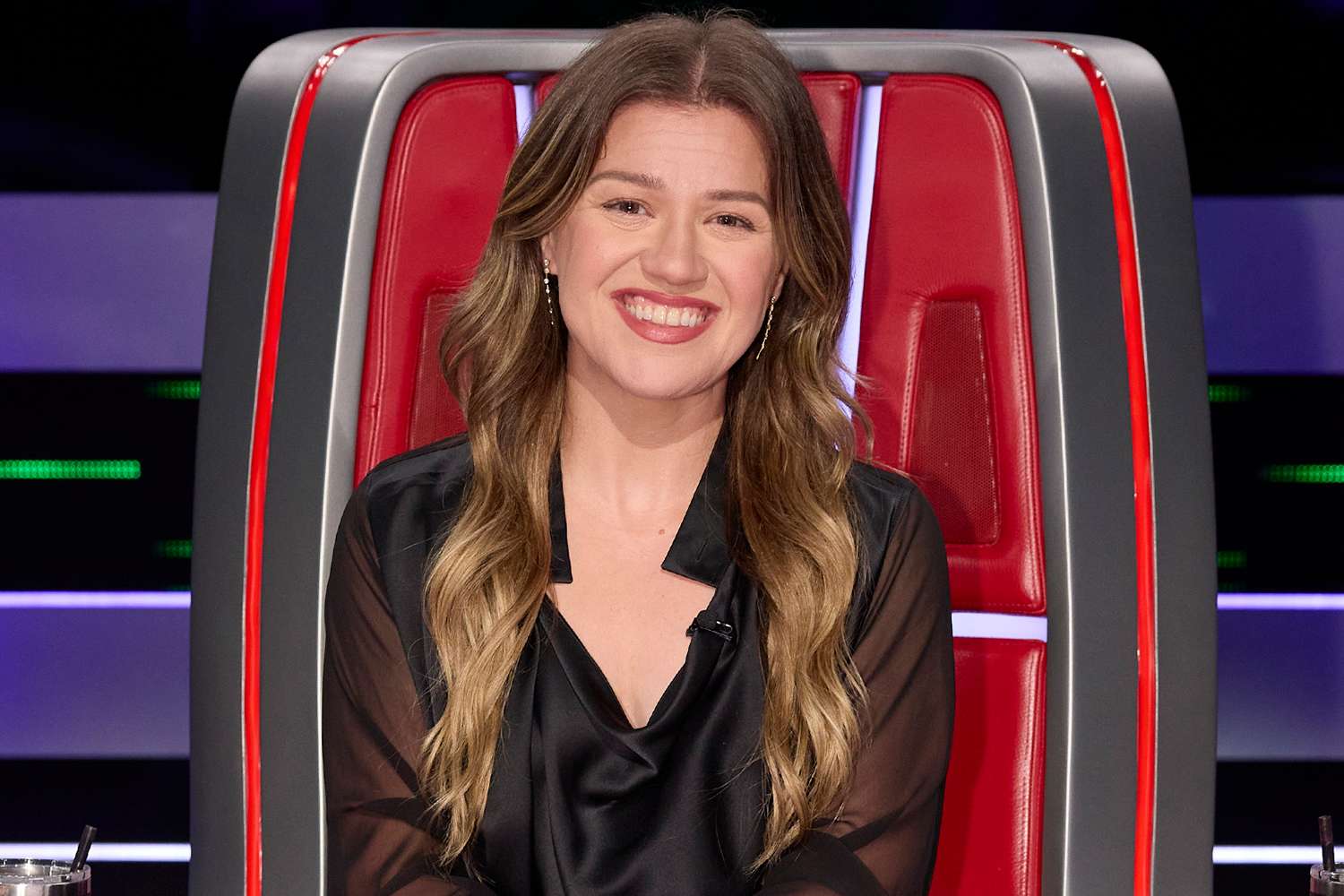
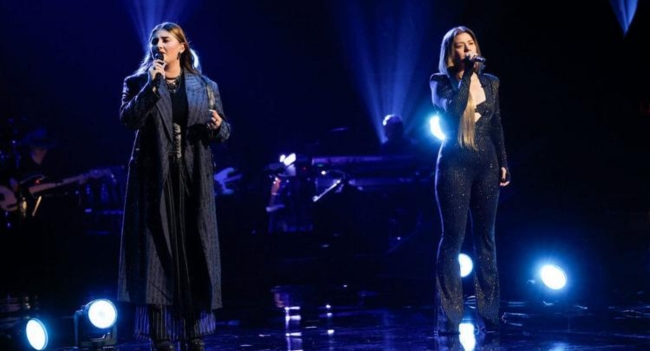
Mikenley Brown didn’t win Season 29 of The Voice, but her final performance gave viewers something that a competition ranking could never fully capture. Standing alongside Kelly Clarkson during the April 15, 2026 finale, the 19-year-old singer delivered an emotional interpretation of Billie Eilish’s “What Was I Made For?” that highlighted just how far she had come since her first audition.
The duet brought together two singers at dramatically different stages of their careers. Clarkson was already a Grammy-winning superstar, an American Idol champion and a four-time winning coach on The Voice. Brown was a young artist from New Castle, Indiana, experiencing one of the biggest moments of her musical journey.
What made their performance especially meaningful was the connection between where Brown’s journey began and how it ended.
When Brown first appeared during the Blind Auditions, she chose Katy Perry’s “Teenage Dream,” a song that many listeners associate with bright pop production and an upbeat romantic atmosphere.
Rather than attempting to reproduce Perry’s original recording, Brown transformed the familiar hit into something more personal.
Her smoky vocal tone and distinctive interpretation helped establish an artistic identity that immediately separated her from a conventional pop cover.
The performance earned three chair turns, giving Brown an opportunity to choose between multiple coaches who recognised her potential.
Clarkson was the last of the three to turn her chair.
That detail became particularly interesting as the season progressed, because Brown ultimately selected Team Kelly despite Clarkson’s later response.
It was a decision that would shape the remainder of her experience on the programme.
For Clarkson, coaching Brown meant working with a young performer who already demonstrated an individual musical style. Rather than simply teaching her to sing familiar songs convincingly, the challenge was helping her develop the qualities that made her voice recognisable.
That distinction matters in a competition where contestants regularly perform material associated with some of the world’s most successful recording artists.
A technically strong performance can impress an audience, but establishing a musical identity requires something more.
Brown’s Blind Audition suggested that she understood the value of interpreting a song rather than imitating its original performer.
And that same quality would eventually become central to her finale duet.
The song selected for the final performance, Billie Eilish’s “What Was I Made For?,” presented a very different musical challenge from “Teenage Dream.”
Originally released as part of the soundtrack to the 2023 film Barbie, the ballad became widely recognised for its introspective atmosphere and emotional vulnerability.
Written by Eilish and Finneas O’Connell, the song explores questions of identity, purpose and uncertainty.
Its understated musical arrangement places considerable emphasis on the singer’s ability to communicate emotion without relying on elaborate production.
That made it an intriguing choice for a duet between Clarkson and Brown.
Clarkson is known for a powerful voice capable of delivering dramatic vocal moments, while Brown had established herself through a more distinctive, smoky style.
Bringing those approaches together required the performers to find a balance between individual expression and musical harmony.
The finale arrangement placed the singers against delicate piano accompaniment, allowing their contrasting vocal qualities to remain central to the performance.
Brown’s delivery provided a different texture alongside Clarkson’s more commanding vocal presence.
Rather than making their differences a weakness, the contrast became one of the duet’s defining qualities.
The performance also demonstrated something important about Clarkson’s approach to collaboration.
She has spent decades performing alongside artists from different musical backgrounds, and her ability to adapt to another singer’s style has become a recognisable feature of her career.
During this duet, however, the challenge was not simply delivering an impressive vocal performance herself.
She was sharing the stage with a young artist whose journey she had helped guide throughout the competition.
That relationship gave the performance an emotional significance beyond the song itself.
Clarkson was no longer evaluating Brown from a coaching chair. She was performing beside her as a musical partner.
For a contestant who had started the season hoping to impress the judges, that represented a remarkable change in circumstances.
One of the most striking moments arrived shortly after the 1:50 mark, when Clarkson delivered an impressive high vocal run.
The moment demonstrated the vocal power that has helped define her career, bringing a dramatic lift to an otherwise restrained arrangement.
It also provided a contrast with Brown’s distinctive delivery, allowing the performance to showcase two different approaches to the same emotional material.
Even fellow coach John Legend appeared impressed as the singers brought their voices together.
The performance subsequently attracted attention online, with its YouTube video reportedly receiving approximately 196,000 views during its first week.
Among the comments was an enthusiastic response from a viewer who described Clarkson’s vocal ability as something beyond ordinary talent.
“Kelly doesn’t have talent, she has a superpower. She can sing anything with anyone. It blows my mind!” the viewer wrote.
Other listeners focused on the relationship between the two voices, praising the way Brown held her own alongside such an experienced performer.
That observation is particularly important when considering what the duet represented for the younger singer.
Sharing a stage with Clarkson could easily have become an intimidating experience.
After all, Clarkson has spent more than two decades performing professionally, recording successful albums and demonstrating her vocal abilities across numerous genres.
Brown, meanwhile, was still at the beginning of her career.
Yet the purpose of a successful duet is not necessarily for both singers to demonstrate identical levels of vocal power.
It is to create a performance in which their individual strengths contribute to a convincing musical result.
Brown’s distinctive tone offered something different from Clarkson’s approach, helping the arrangement avoid sounding like a simple demonstration of the coach’s abilities.
That is one reason the performance deserves attention beyond its most dramatic high note.
The finale also brought an end to Brown’s competitive journey.
She finished fourth in Season 29, behind fellow finalists Lucas West, Liv Ciara and eventual winner Alexia Jayy.
For contestants, reaching the finale is already a significant achievement, particularly in a competition that begins with numerous talented hopefuls.
But finishing fourth can create an interesting contrast between competitive results and artistic development.
A television ranking identifies how contestants performed within the competition’s voting structure. It does not necessarily determine which artists will establish successful careers afterwards.
American Idol and The Voice have both demonstrated that contestants who do not win can still develop substantial musical careers.
For Brown, the experience provided opportunities to perform on national television, receive guidance from an established recording artist and introduce her musical identity to a wider audience.
Those experiences remain valuable regardless of her final placement.
The duet with Clarkson may also become one of the performances audiences associate most strongly with her time on the programme.
It brought together the relationship she had developed with her coach, the vocal individuality she demonstrated during her audition and the emotional significance of reaching the finale.
There is also an interesting connection between the song’s central theme and Brown’s position as a young performer.
“What Was I Made For?” explores uncertainty about identity and purpose, subjects that can resonate with anyone navigating a major transition.
For a 19-year-old singer approaching the end of a life-changing television experience, those themes offered a meaningful backdrop to her final appearance.
That does not mean the song was intended as a personal statement about Brown’s private experiences.
Rather, its emotional subject matter created an opportunity for the audience to reflect on the journey they had watched unfold.
In my view, that is what made the duet more significant than another impressive Kelly Clarkson vocal performance.
The high note was memorable, and Clarkson’s technical abilities were unmistakable. But the larger story was watching a young singer who had once hoped to earn a coach’s approval stand beside that same coach in the season’s final moments.
Brown’s fourth-place finish did not erase what she accomplished.
If anything, the performance offered a reminder that success in a singing competition can take several forms.
Winning the title is one achievement. Developing a recognisable artistic identity, gaining valuable experience and creating performances that audiences remember are others.
As Brown moves beyond The Voice, the question becomes what she will do with the opportunities the competition has created.
Will she continue exploring the smoky, individual style that made her Blind Audition memorable? Could her experience working with Clarkson influence the direction of her future music?
Those answers remain unknown.
But one thing is clear from the finale: Brown reached the end of her competition journey with an opportunity to perform alongside one of the artists who helped guide her there.
And perhaps that is a more meaningful conclusion than a ranking alone can express.
Did Mikenley Brown deserve to finish higher than fourth place, or was her emotional duet with Kelly Clarkson the perfect ending to her Voice journey?