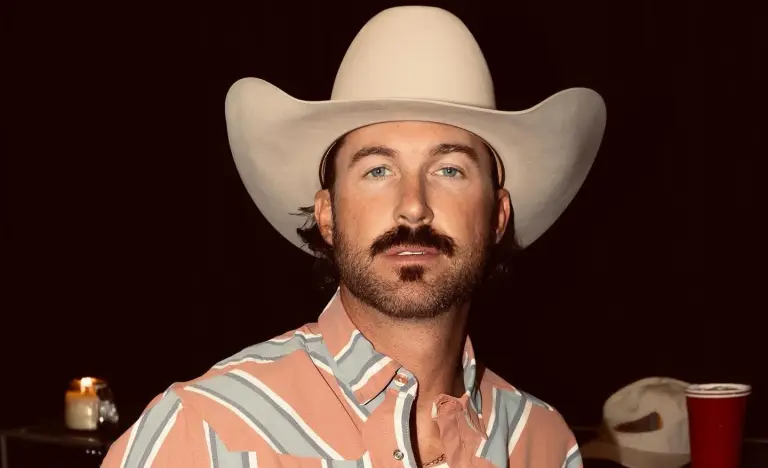
While some of country music’s biggest names gathered in Nashville for the 2026 CMA Awards, Riley Green was somewhere entirely different. Instead of walking the red carpet or watching the ceremony from the audience, the country singer shared a peaceful outdoor scene, accompanied by a Gary Allan song that seemed perfectly suited to the moment.
It was a striking contrast. On November 18, Nashville was celebrating one of country music’s most prestigious nights, while Green appeared to be enjoying the kind of quiet countryside experience that has long been central to his musical identity. And although he never directly explained his decision to miss the ceremony, the timing of his posts offered an interesting glimpse into how he was spending the evening.
The first image appeared on his Instagram Story, showing a peaceful landscape and a solitary tree against the evening sky. Green added just three words: “Hard to beat.” He paired the photograph with Gary Allan’s “Right Where I Want to Be,” a song choice that made the post feel particularly fitting.
The combination immediately suggested a different kind of satisfaction from the excitement usually associated with an awards ceremony. There were no flashing cameras, designer suits or backstage interviews in the image. Just an open landscape, a quiet moment and a song about being exactly where someone wants to be.

Green followed the photograph with a short video of himself walking alone through the countryside. Dressed in hunting gear and carrying his bow, he appeared comfortable in an environment that has been an important part of his life away from music.
The singer did not disclose his exact location. He owns property in Alabama and has also been associated with hunting land in Kansas, but the posts did not establish where he was spending the evening.
That uncertainty leaves room for curiosity, but the more interesting question is why the contrast between Green’s evening and the CMA Awards feels so natural for him.
Throughout his career, Green has cultivated a musical identity closely connected to small-town life, family traditions, hunting, fishing and the outdoors. Those themes are not simply occasional references in his songs. They form a recognizable part of the personality he presents to audiences.
For listeners who connect with his music because of its traditional country influences, the sight of Green spending an evening outdoors may feel more consistent with his artistic identity than an appearance at a glamorous industry event.
Yet his absence also came during an exceptionally demanding period in his career. Green has spent much of 2026 balancing recording commitments, touring and his responsibilities as a coach on NBC’s The Voice.

His latest album, That’s Just Me, arrived after the eligibility window for the 2026 CMA Awards, meaning the project was not eligible for consideration during this year’s nomination cycle. Green received no nominations at the ceremony, removing one of the most obvious professional reasons for him to attend.
That detail matters because an absence from a major awards show can easily become the subject of speculation. In Green’s case, there is no confirmed indication that he skipped the ceremony as a protest, nor did he publicly identify a disagreement with the CMA organisation as the reason for staying away.
What is known is that his schedule has been unusually busy. During a recent conversation with People, Green acknowledged that his work commitments had kept him away from home for an extended period. He even revealed that he had not seen his dog, Carl, in a month.
For someone who frequently celebrates outdoor life and familiar routines, that separation provides useful context for understanding the appeal of a quiet evening away from the entertainment industry.
There is also a practical difference between the demands of touring and those of television. Performing concerts requires travel, rehearsals and appearances across different cities. Working on The Voice adds another schedule of production commitments, coaching responsibilities and time in Hollywood.
The live-show stage of the competition has placed Green in a setting that differs considerably from the countryside imagery associated with his music. Television coaching brings him into contact with aspiring performers and a national audience, while also creating additional professional obligations.
His participation in the programme represents an important expansion of his public profile. Although Green already has an established country music following, The Voice introduces him to viewers who may not regularly follow country radio or attend his concerts.
That exposure can create new opportunities, but it also means balancing multiple responsibilities at a time when his recording career remains active.
Seen through that lens, the November 18 posts could simply document a rare opportunity to enjoy the outdoors. They do not require a hidden explanation to be interesting.
However, another development shortly before the ceremony added a more complicated dimension to the conversation surrounding his absence.
Green had publicly supported veteran country singer Sammy Kershaw after an issue arose concerning Kershaw’s access to the CMA Awards red carpet.

Kershaw, a longtime figure in country music, had expressed frustration over the situation. Green responded in the comments of his Instagram post, arguing that someone with Kershaw’s career achievements had earned the right to be there.
His message was notably direct. Rather than avoiding the discussion, Green publicly questioned the situation and described it as disappointing.
The CMA organisation subsequently contacted Kershaw, and the issue was resolved. Kershaw attended the ceremony with his wife, and the couple appeared on the red carpet before being seen inside the event.
The resolution is important because it separates the original disagreement from the outcome. Kershaw ultimately participated in the awards ceremony, while Green’s earlier comments remain an example of his willingness to speak publicly in support of another country artist.
It would be tempting to connect that disagreement directly to Green’s decision not to attend. But there is no verified evidence establishing such a connection.
Green did not announce a boycott, and his outdoor posts contained no direct criticism of the CMA Awards. The available information supports a much narrower conclusion: he defended Kershaw before the event and later spent the ceremony evening outdoors.
Even without evidence of a protest, the sequence raises an interesting question about the relationship between country music’s established traditions and the modern entertainment industry.
Awards ceremonies are designed to recognise professional achievement, celebrate successful artists and bring the music community together. Yet country music also has a long tradition of performers emphasising independence, authenticity and loyalty to the people who influenced them.
Green’s public support for Kershaw fits comfortably within that second tradition. Kershaw’s career stretches back decades, and his recordings helped shape the sound of country radio during the 1990s.
For younger artists who grew up listening to that generation, recognition of veteran performers can carry considerable personal and professional significance.
Green’s comments therefore offered a glimpse into his attitude towards country music history, regardless of whether they had anything to do with his own attendance.
The contrast between his outspoken defence of Kershaw and his understated Instagram Story is particularly interesting. One moment involved a public disagreement over an industry event. The other consisted of a peaceful landscape and a few words about enjoying the moment.
Together, they show two sides of Green’s public personality: an artist prepared to express an opinion when he believes something matters, and someone who continues to place visible importance on life beyond the spotlight.
That balance could become increasingly relevant as his career develops. With new music, touring and television responsibilities competing for his attention, Green is operating across more areas of the entertainment industry than ever before.
The challenge for any artist in that position is maintaining a recognizable identity while embracing new opportunities.
In Green’s case, the outdoors has remained a consistent part of that identity. His November 18 posts did not need an elaborate explanation to communicate that he was enjoying the moment.
There is something particularly fitting about the choice of Gary Allan’s “Right Where I Want to Be.” Without claiming to know Green’s intentions, the song’s title provides an almost perfect description of the image he shared.
While his industry colleagues celebrated in Nashville, Green appeared content with a quieter setting. Whether that was a deliberate decision to avoid the ceremony or simply how his schedule worked out remains unknown.
The most reasonable interpretation is also perhaps the most interesting: a major country artist does not necessarily need to attend every major industry event to demonstrate his connection to the genre.
For Green, a peaceful evening outdoors may have offered something the red carpet could not, particularly after months of professional commitments.
And with The Voice bringing him back to television on Monday, the break may prove relatively brief.
Ultimately, Green’s absence from the CMA Awards is less revealing than the way he chose to share his evening. Rather than issuing a statement about the ceremony, he showed followers a landscape, a hunting outing and a moment of apparent contentment.
That leaves fans with a question worth discussing. Was Riley Green simply enjoying a well-earned break from an exhausting schedule, or does his choice reflect something country music audiences have always admired: an artist who seems just as comfortable away from the spotlight as he is standing in it?