Riley Green had two talented singers standing in front of him, one difficult decision to make, and a promise from earlier in the competition that ultimately shaped the outcome. When 15-year-old Allie Rae faced 19-year-old Harmony McKee on The Voice, their performance of Bill Withers’ “Ain’t No Sunshine” impressed the coaches, but Green’s explanation for choosing Rae raised a bigger question: should an early commitment influence a coach’s decision when both contestants deliver such a strong performance?
The October 19 episode of Season 30 presented Green with one of the tougher choices of his Battle Round. Rae brought a distinctive vocal style that stood out despite her age, while McKee demonstrated the kind of powerful, controlled delivery that can make an established song feel fresh. Both singers received praise, yet only one could move forward with Team Riley.
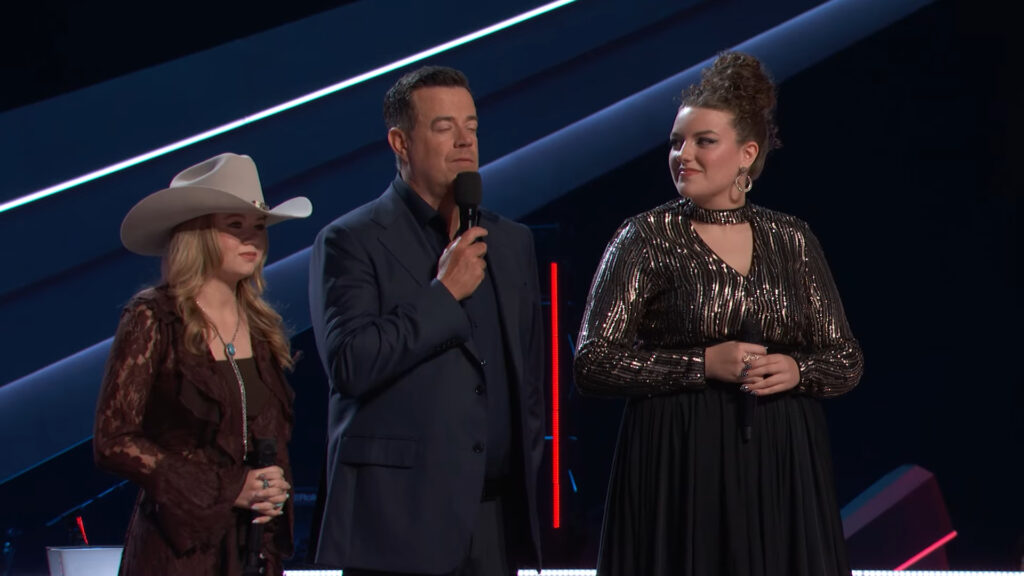
What made the matchup particularly interesting was that the two contestants offered different reasons for a coach to invest in them. Rae had already earned Green’s confidence during the Blind Auditions, when he used his First In button to secure her for his team. McKee, meanwhile, had the opportunity to demonstrate her abilities in a demanding head-to-head performance, where every vocal decision could influence the result.
Their song choice was no easy assignment. “Ain’t No Sunshine” is a classic that depends on restraint as much as power, asking singers to communicate emotion without relying entirely on vocal fireworks. A performer must find the right balance between subtlety, phrasing, and intensity, making it a revealing test for artists with contrasting styles.

During rehearsals, Team Riley advisor Carly Pearce was especially struck by Rae’s voice. She compared the teenager’s natural vocal richness to what she remembered hearing from LeAnn Rimes when she was young, emphasizing that Rae possessed a maturity that seemed unusual for someone of 15. The praise suggested that Rae’s appeal was not simply about being a young contestant tackling a classic song; her vocal character was a significant part of what made her stand out.
McKee brought a different kind of strength to the pairing. Green had already recognized her commanding voice, and her performance gave the other coaches plenty to appreciate. Kelly Clarkson described McKee’s voice as enormous and capable of filling a room, while also admitting that Rae’s style particularly appealed to her.
Queen Latifah likewise found reasons to praise both contestants, noting Rae’s high notes and McKee’s ability to sustain hers. Adam Levine and the other coaches also responded positively to the performance, reinforcing just how closely matched the singers appeared to be.
For Green, the praise created a difficult situation. He described the Battle as one of his favorites and said the contestants complemented one another well. He also called Rae a major talent regardless of age, expressing confidence in her future, while describing McKee as one of the most talented vocalists on the show.
Those comments made the final choice especially intriguing. If both singers had impressed their coach and the wider panel, what ultimately separated them? Green’s answer pointed directly to his earlier decision to claim Rae during the Blind Auditions.
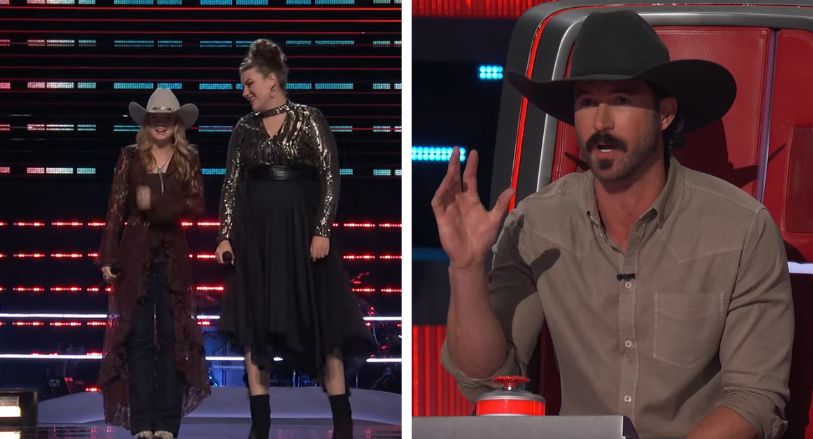
He explained that he chose her because she was the contestant for whom he had used his First In button, adding that he had believed in her from the beginning. He also said he thought she had a strong chance of going all the way in the competition.
That explanation reveals an important part of how The Voice works. Coaches are not necessarily looking for a single winning performance in every Battle; they are assembling teams of artists they believe can develop into serious contenders. An early commitment can represent confidence in a singer’s potential, and a coach may view that potential as part of the decision when the competition reaches a difficult matchup.
But there is another side to that reasoning. A Battle Round is designed to test contestants against one another, and viewers naturally expect the performance to carry considerable weight. When a coach cites an earlier commitment as a reason for choosing one singer, it can leave audiences wondering whether the contestant standing onstage that night had a fair opportunity to change the coach’s mind.

That is where Green’s decision becomes more interesting than a simple disagreement over whose voice sounded better. His First In choice was an expression of faith in Rae, but it also created an expectation that he would continue supporting her. The challenge for a coach is deciding when that faith should be rewarded and when the evidence from a new performance should prompt a different choice.
The viewer response reflected that tension. Some fans favored McKee, praising her smooth tone and arguing that she had delivered the stronger performance. Others supported Rae’s advancement, while many acknowledged that the pair had worked well together and made the decision difficult.
Those different reactions are understandable because musical preferences are rarely universal. One listener may value McKee’s vocal power and sustained notes, while another may be drawn to Rae’s distinctive tone and stylistic individuality. Neither preference automatically establishes that one singer is objectively better than the other.
There is also a difference between choosing the best performance of the evening and choosing the artist a coach believes has the greatest potential over several rounds. A contestant can deliver a particularly polished performance without necessarily being the strongest fit for a coach’s longer-term plans. Conversely, an artist with a distinctive style may still have areas to develop but offer something a coach believes could become especially compelling.
The difficulty is that viewers can judge only what they see and hear, while the coach is also considering the team’s overall direction and the possibilities for future growth. That does not make every decision correct, but it helps explain why a coach’s reasoning may differ from the audience’s verdict.
For Rae, the victory brings both opportunity and responsibility. Green has publicly expressed strong confidence in her potential, and the next rounds will give her a chance to show whether she can justify that belief. Being selected by a coach who backed her from the start can be an advantage, but it also means she will be expected to keep improving as the competition becomes more demanding.
For McKee, the elimination marks the end of her run on Team Riley, but it does not erase the praise she received from the coaches or the performance she delivered. Her strong showing demonstrates why Battle Round decisions can leave viewers divided even when the contestants themselves do everything asked of them.
In my view, Green’s decision was understandable as a vote of confidence in Rae, but his explanation also exposes the tension at the heart of the format. The First In button establishes an early connection between coach and artist, yet the Battles are supposed to test how those artists perform when placed directly against a teammate. A coach must balance loyalty to an initial choice with the responsibility to evaluate what happens onstage.
Ultimately, Rae earned the opportunity to continue, and Green believes she has the potential to go far. Whether that prediction proves correct remains to be seen, while McKee’s performance leaves a legitimate question about how closely the coach weighed their contrasting strengths.
So, what do you think: did Riley Green make the right call by standing behind his original First In pick, or should Harmony McKee’s performance have been enough to change his mind? When two singers deliver a close Battle, should a coach prioritize an artist’s long-term potential or judge the decision almost entirely on what happens that night?