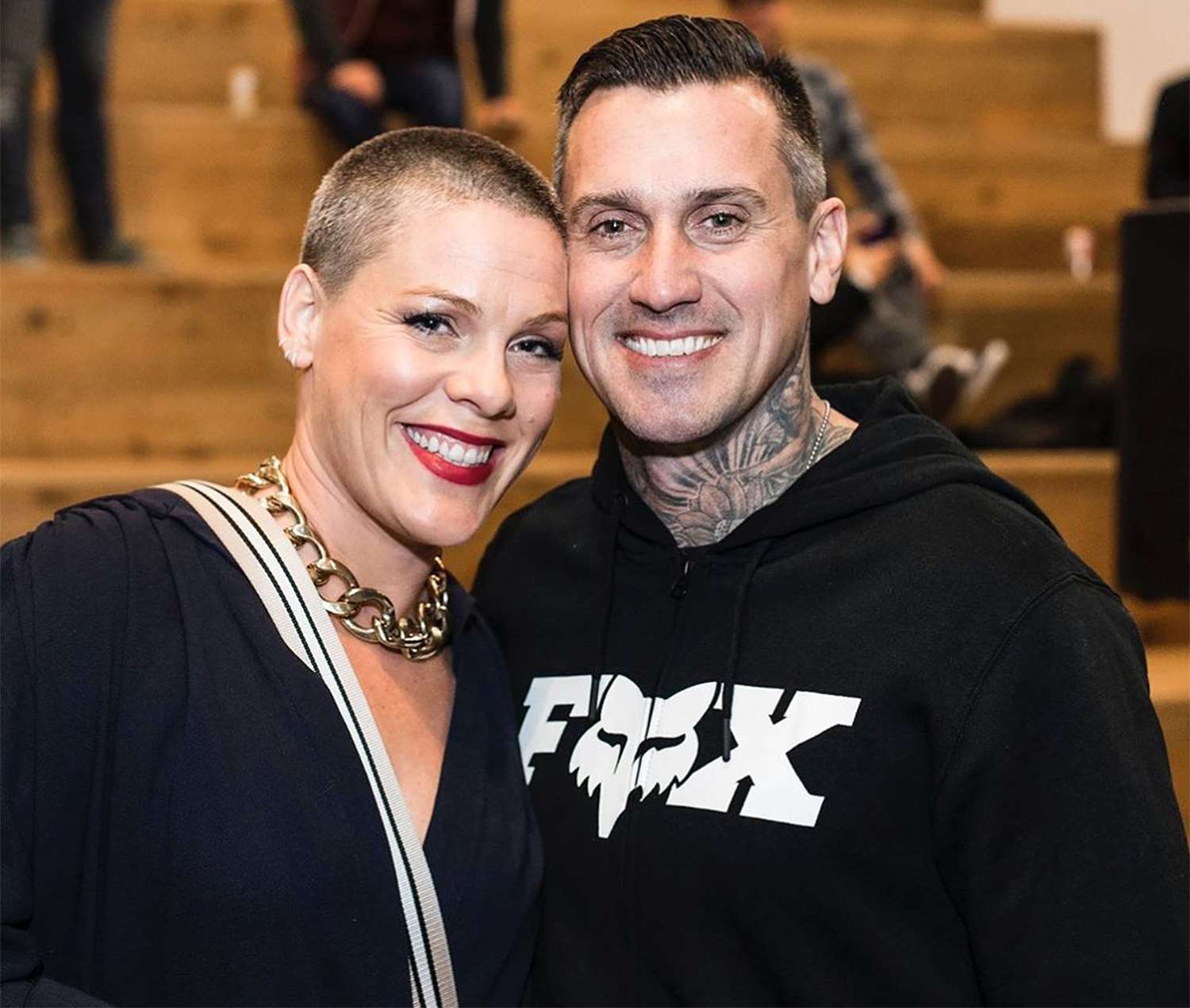
Most celebrity marriages are built on careful image control. Public arguments stay hidden, frustrations are softened for interviews, and imperfections are quietly buried beneath polished social media smiles. But Pink and Carey Hart have spent years doing the exact opposite.
Their relationship has never pretended to be flawless.
Over the course of their famously intense marriage, the couple openly discussed arguments, temporary breakups, emotional chaos, stubbornness, and the exhausting realities of trying to make long-term love survive under constant public attention. Instead of hiding the mess, they leaned into it — and nowhere was that brutal honesty more entertaining than in Pink’s wildly candid 2013 anthem “True Love.”
The song instantly caught listeners off guard.
On the surface, it sounded upbeat, catchy, and radio-ready. But underneath the infectious pop-rock energy was something unexpectedly savage. Pink openly vented about the emotional contradictions of marriage, singing about loving her husband deeply while simultaneously wanting to scream at him, fight with him, and occasionally fantasize about strangling him.
It wasn’t a fairy tale.
It was relationship realism set to a hit chorus.
And somehow, that honesty made the song even more relatable.
What surprised fans most, however, wasn’t the lyrics themselves — it was Hart’s reaction to hearing them.
Instead of feeling embarrassed or offended, Hart reportedly embraced the song completely. In fact, he publicly described “True Love” as one of his favorite tracks Pink had ever written, largely because it captured the reality of their relationship with hilarious accuracy.
For him, the song worked precisely because it didn’t pretend.
Pink had built her entire career around emotional transparency. Long before “True Love,” she earned a reputation for exposing insecurity, anger, heartbreak, dysfunction, and vulnerability without filtering any of it into polished celebrity perfection. The song simply carried that same honesty into marriage.
And Hart understood that better than anyone.
Rather than distancing himself from the track, he leaned into the humor behind it. He even appeared alongside Pink in the colorful music video, joining the chaos instead of avoiding it. Their daughter also appeared in the video, making the project feel even more personal and authentic.
The message was unmistakable: Hart wasn’t threatened by Pink’s honesty.
He admired it.
Fans became fascinated with the couple because their dynamic felt refreshingly real compared to the carefully manufactured romances often presented in celebrity culture. Pink and Hart never tried to convince people that love meant endless perfection or glamorous harmony. They openly acknowledged that real relationships involve conflict, frustration, emotional exhaustion, and moments where both people drive each other completely insane.
Ironically, that honesty may have become the foundation of their longevity.
By the time “True Love” became a commercial hit, the couple had already survived years of turbulence, including separation, public scrutiny, and intense emotional ups and downs. Instead of destroying their relationship, those experiences appeared to deepen their understanding of each other.
Hart, in particular, seemed to appreciate that Pink never softened her emotions simply to protect appearances.
To him, the song wasn’t an insult.
It was truth.
And beneath all the sarcastic lyrics, playful hostility, and chaotic humor, “True Love” ultimately revealed something surprisingly heartfelt about their marriage: they were willing to survive the ugly parts together — and laugh about them afterward.
In an entertainment industry obsessed with perfect love stories, Pink and Carey Hart built something audiences found far more believable.
A relationship honest enough to turn arguments into platinum records.