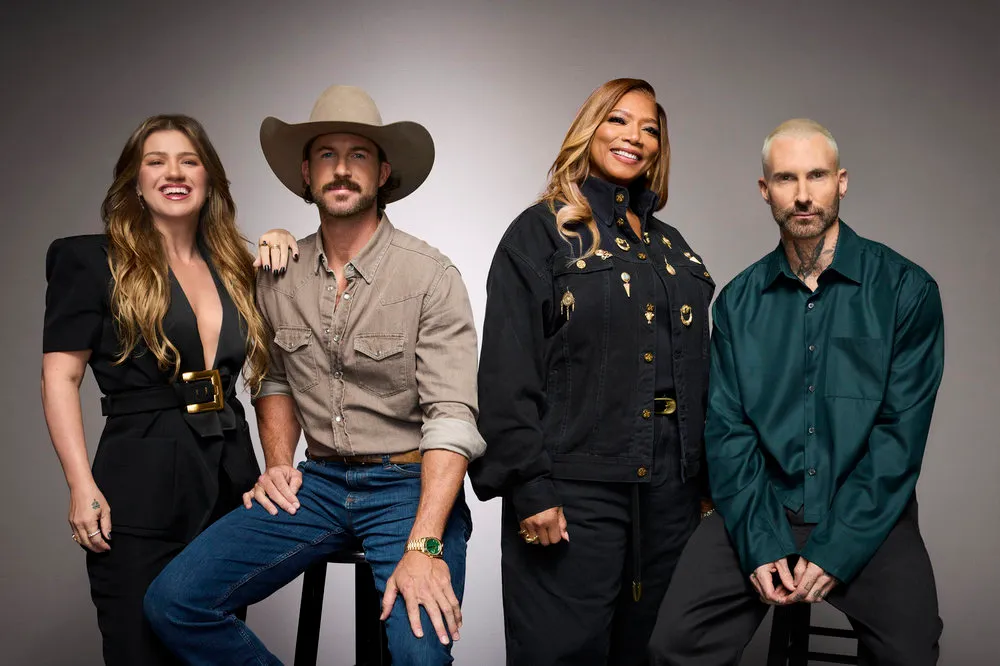
The Voice Season 30 is about to put its coaches in an uncomfortable position, and even they are struggling with what comes next. After weeks of auditions and Battles, 28 contestants remain in the competition, but only 13 will advance to the Live Shows. That means 15 singers are about to lose their chance at the championship in a single elimination round unlike anything the show has attempted before.
The new stage is called Cut Week, and it is already creating tension among Kelly Clarkson, Adam Levine, Queen Latifah, and Riley Green. For the first time in the show’s history, the competition is replacing its traditional Knockout Rounds with a format that forces coaches to make several difficult decisions in a very short period.

What makes this particularly challenging is that the coaches are not simply deciding which artists performed best during the previous round. They must identify the contestants they believe have the strongest chances of succeeding in the Live Shows, while knowing that some talented singers will inevitably be left behind.
Each coach entered Cut Week with seven artists following the Battle Rounds. The first major decision involves selecting two contestants from each team to receive automatic advancement. Those eight singers will avoid the pressure of competing for the remaining positions.
The other five artists on every team must perform again, hoping to convince their coach that they deserve another opportunity. Each coach will then select one additional contestant to advance, bringing the total to three artists per team.
But there is one more twist.
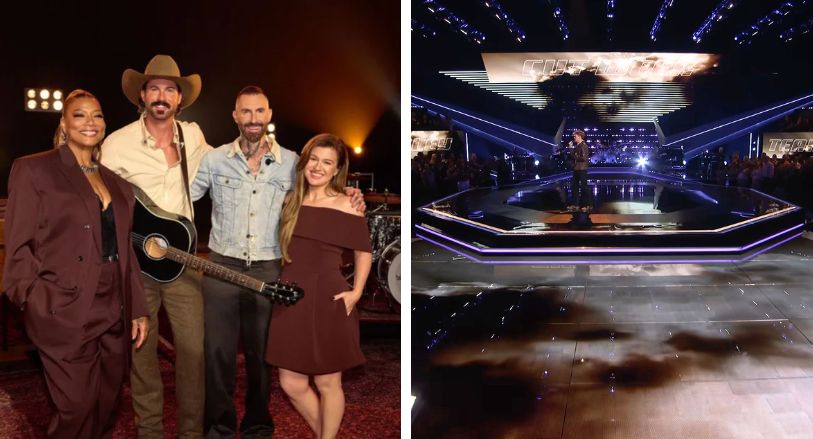
America will also have the opportunity to save an additional contestant through public voting. That means one team will ultimately have four artists in the Live Shows, while the other three teams will have three each.
The result is a Top 13 lineup, created through a combination of coaching decisions and viewer support.
On paper, the arrangement sounds straightforward. In reality, it could produce some of the most uncomfortable moments of Season 30.

The coaches have already acknowledged that the new format is going to be difficult. Adam Levine openly described the upcoming round as brutal, explaining that every contestant wants to enter the Live Shows in the strongest possible position.
Queen Latifah had an even more colorful reaction. She joked that the round should probably be called “cuss week” because of how much frustration the decisions were creating behind the scenes. She also admitted that she did not want to send anyone home because she had become attached to her team.
Kelly Clarkson was equally unhappy about the situation, telling host Carson Daly, “It’s really not cool.”
Those reactions reveal something important about Cut Week. The pressure is not limited to the contestants. The coaches must make decisions that could disappoint artists they have spent weeks mentoring and encouraging.
For Kelly, Adam, Queen Latifah, and Riley, the challenge is finding a balance between rewarding previous performances and recognizing which singers are prepared for the next level.
A contestant might have delivered an exceptional Battle performance but struggle to demonstrate the same consistency during another round. Someone else might have shown steady improvement without producing one particularly unforgettable moment. Coaches must decide which qualities matter most when the competition becomes increasingly difficult.
That creates an interesting dilemma for viewers, too.

Should the automatic places go to the strongest performers from the Battles? Should coaches prioritize contestants with the greatest potential? Or should they consider which artists have the best chance of connecting with television audiences during the Live Shows?
There may not be one universally correct answer, and that is exactly what makes the upcoming decisions so compelling.
Another interesting aspect of Cut Week is the position of contestants who previously received Steals. These singers were given another opportunity after their original coaches selected someone else in the Battles. However, their second chance does not automatically protect them from the next elimination.
Among the remaining contestants are Kayleigh Matthews on Team Riley, Destinee Monroe on Team Queen Latifah, Brandon Diaz on Team Adam Levine, and Marcus Ladden Jr. on Team Kelly Clarkson.
All four must still navigate the new format alongside their teammates.
Meanwhile, each coach has a different collection of artists to evaluate. Riley Green’s team includes Joe Henley, Everett Bounds, Ferryn and Brinkley, Keiyana Osmond, Allie Rae, and Cade Mower, alongside Kayleigh Matthews.
Queen Latifah has Alt Bloom, Lillie Kolich, Bigcountry, Chari, Bryan Jaymes, Mia Knight, and Destinee Monroe. Adam Levine’s team features Connor Closs, Evan James, Brandon Diaz, Owen Uffens, Amanda Mikkel, Lexi Stephens, and Dakota Cohen.
Kelly Clarkson’s remaining artists are Koumba Diallo, Anna McElroy, Nina Howland, Marcus Ladden Jr., Kyle Davis, Brianna Cameron, and Brooklyn Marie.
With such different voices and musical styles represented across the four teams, the selections could look very different depending on what each coach believes the competition needs.
There is also a significant reason the producers are introducing this format now. Season 30 is making room for an extended six-week Live Show schedule, giving the surviving contestants more opportunities to perform before the finale.
The Live Shows are scheduled to begin November 9, followed by episodes on November 16, November 23, November 30, and December 7. The December 14 broadcast will determine the Season 30 champion.
Perhaps the most important change is how viewers will discover the results.
Instead of separating performances and eliminations into different broadcasts, The Voice is introducing same-night results during the Live Shows. Executive producer Audrey Morrissey explained the approach by saying, “It’s real-time voting. So, everybody performs, and we find out that night who’s moving on.”
That could make the final stretch considerably more exciting. Viewers will have the opportunity to watch contestants perform and then discover the outcome without waiting for another episode.
It also means artists will have to make an immediate impression. There will be less time for performances to build momentum between broadcasts, and every appearance could become especially important.
The introduction of TikTok voting also gives audiences another way to support their favorite singers during the Live Shows, alongside text-message voting. That creates an additional opportunity for contestants to reach viewers beyond the traditional television audience.
Ultimately, Cut Week represents a major gamble for The Voice. Removing so many contestants in one stage creates immediate drama, but it also means some potentially memorable artists may leave before viewers have had the chance to see what they can accomplish in the Live Shows.
Personally, I think the most fascinating part will be watching how the coaches handle the emotional side of their decisions. Selecting two automatic qualifiers is already difficult, but having to choose between five remaining artists could be even harder. And with America’s vote providing another route forward, an unexpected contestant could still change the balance of the competition.
One thing is certain: surviving the Battles is no longer enough to feel comfortable.
Which coach do you think has the most difficult team to narrow down, and do you believe this new Cut Week format makes The Voice more exciting or gives contestants too little time to prove themselves?