
Winning a place in the next round of The Voice is only part of what makes a contestant memorable, and Cade Mower’s latest victory offers a fascinating reminder of how unpredictable a singing competition can be. His Battle Round performance against Brayden Howell also raises a bigger question: when two singers bring completely different strengths to the same song, what should ultimately determine who moves forward?
The two Team Riley Green artists went head-to-head with “Wondering Why” by The Red Clay Strays, delivering a musical matchup that gave the coaches plenty to consider. Mower, a 35-year-old singer from Bluffdale, Utah, brought the experience and musical identity that had already earned him a four-chair turn during his Blind Audition. Howell, just 19 and from North Carolina, offered a distinctive throwback style that immediately caught the attention of the panel.

Although Green ultimately chose Mower to advance, the performances demonstrated why Battles can be among the most difficult stages of a singing competition. The contestants were not simply trying to prove that they could sing. They were trying to show why their individual artistry deserved another opportunity, knowing that only one could secure the immediate reward of moving forward.
For Mower, the decision represented an important step toward the next phase of the competition. For Howell, it marked the end of his televised journey this season, but it also left behind a performance that highlighted a different kind of potential. And that contrast is what makes their matchup worth examining beyond the result.

Kelly Clarkson was particularly enthusiastic about Howell’s vocal approach. She praised his ability to sustain long notes without taking a breath or using vibrato, describing the technique as an impressive thing to witness. Her comments highlighted a quality that can be difficult to measure in a competition setting: a singer’s ability to develop a recognizable sound rather than simply deliver technically competent vocals.
Clarkson also made it clear that Mower had considerable talent of his own, praising his vocals while acknowledging that she personally leaned toward Howell. Her assessment illustrated the challenge facing the coaches. A performance can impress through vocal technique, individuality, confidence, or a combination of all three, and those qualities do not always point toward the same contestant.
Adam Levine and Queen Latifah also recognized the strengths of the two singers. Latifah praised Howell for giving Mower a serious challenge, while her later comments made clear just how much she appreciated the young artist. She said she would have stolen him had that option still been available to her.
Those reactions did not change the outcome, but they offered an important reminder that a Battle Round decision is not necessarily a declaration that one artist lacks talent. The format requires a coach to choose a contestant who, in that particular moment, appears best positioned to continue the competition. Another coach might weigh the same qualities differently.

Green’s decision ultimately came down in Mower’s favor. The country singer recognized Mower’s understanding of his musical identity and selected him to continue to Cut Week. He also took time to acknowledge Howell’s accomplishments, emphasizing how remarkable it was for someone so young to have developed a distinctive stage presence and musical personality.
That recognition matters because reality television can make a competition result feel like a final verdict on an artist’s abilities. In reality, it is one decision made within a particular format, under particular circumstances. A contestant can lose a Battle and still possess the qualities needed to build a lasting career.
Howell’s story made that distinction especially meaningful. During the episode, he revealed that he had undergone brain surgery approximately a year before appearing on The Voice stage. The disclosure added another dimension to his journey, explaining why reaching the competition represented such a significant personal milestone for him.

He described the experience through the lens of his faith, expressing gratitude for the opportunity to stand before the coaches after what he had faced. His appearance was not simply about demonstrating his vocal abilities; it represented a moment he had once struggled to imagine reaching.
Yet his experience also offers a useful perspective on the pressures facing young performers. At 19, Howell was competing against artists with different backgrounds, life experiences, and approaches to music, all while adjusting to the demands of national television. His willingness to take on an unfamiliar song and push himself vocally showed that growth can happen even when the immediate result is disappointing.
That lesson became clearer after the episode, when Howell reflected on his time in the competition. He explained that he had previously considered giving up a career in music and that the opportunity to appear on the show had renewed his determination to keep singing. Rather than treating the elimination as the defining moment of his experience, he focused on what he had gained.
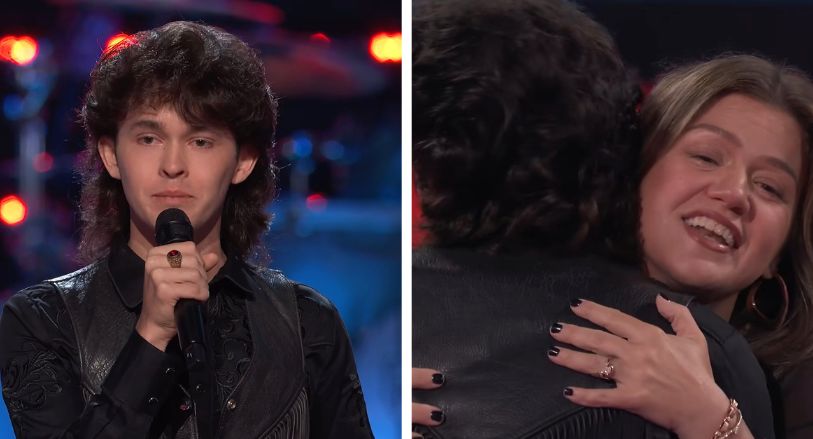
He also credited Mower with helping him discover more possibilities in his own voice. Howell acknowledged that he had been nervous about performing the assigned song but appreciated his Battle partner’s encouragement to attempt the higher notes. That detail is particularly revealing because it shows how a competitive format can create an unexpected opportunity for artistic development.
Contestants may enter a Battle hoping to defeat their opponent, but the preparation process can also teach them things they carry into future performances. For Howell, the experience provided a chance to test his limits, receive professional feedback, and discover that he could attempt material he had initially found intimidating.

For Mower, advancing to Cut Week brings a different challenge. His earlier four-chair turn established him as a singer capable of attracting attention, but each new round requires contestants to demonstrate that they can continue developing under pressure. His next performances will need to build on the qualities that earned him Green’s confidence rather than simply repeat what worked in the Battle.
The remaining question is how Mower will distinguish himself as the competition progresses. His musical identity has already been recognized by his coach, but a strong run on The Voice requires more than one successful performance. Song selection, consistency, adaptability, and the ability to connect with different audiences can all influence how far an artist goes.
Meanwhile, Howell has an opportunity that extends beyond the show’s immediate structure: to continue developing the voice and style that attracted the coaches’ attention in the first place. His distinctive sound may not have been enough to secure this particular Battle, but the feedback he received suggests there is something worth exploring further.
In my view, the most interesting lesson from this matchup is that vocal competitions often ask an impossible question: which singer is better? A more useful question might be which artist delivered the performance that best fit the coach’s vision at that particular stage. Those are not always the same thing, and the distinction helps explain why talented contestants can leave while others continue.

Mower earned his place in the next round, and he now has the responsibility of proving that the decision was the right one. Howell, meanwhile, leaves with renewed motivation to pursue music and a performance that showcased his individuality. Both outcomes can be meaningful, even if only one contestant received the immediate victory.

Now the conversation turns to what comes next. Can Mower build on his Battle Round success and become a serious contender as The Voice progresses, or do you think Howell’s distinctive voice deserved another chance in the competition? And when two artists bring such different strengths to the same song, should coaches prioritize technical performance, originality, or long-term potential?