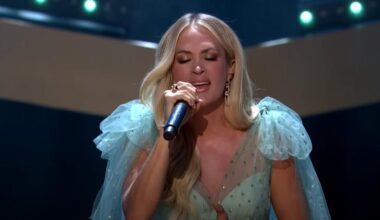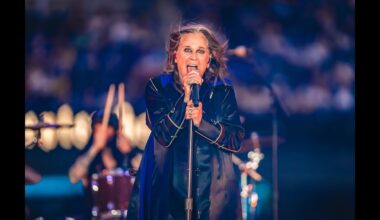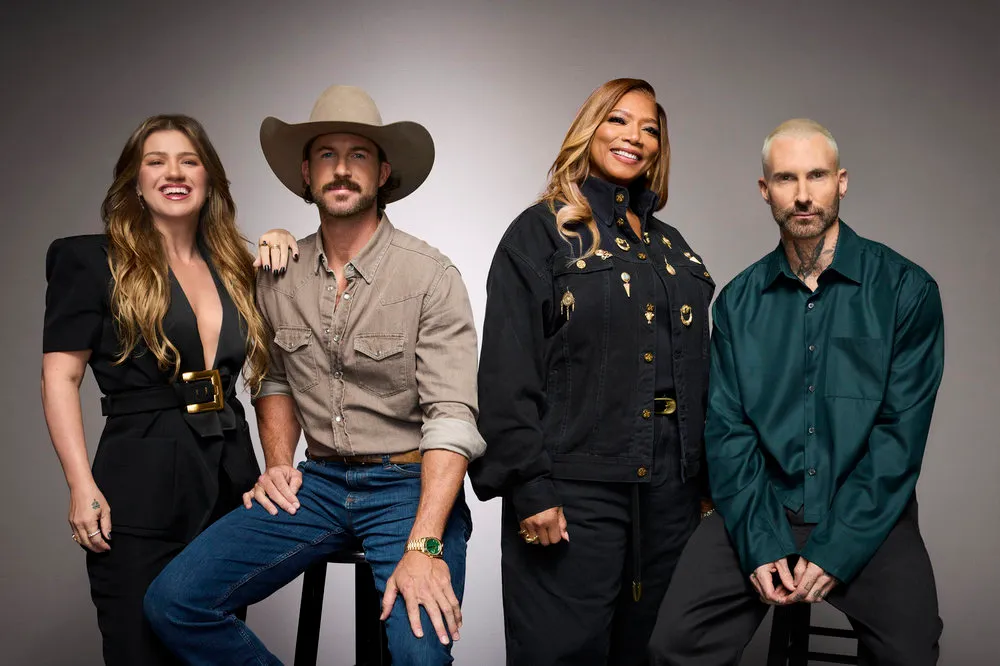
Nine artists who earned four-chair turns during The Voice Season 30 Blind Auditions are heading into a round where early excitement will no longer be enough. With Kelly Clarkson, Adam Levine, Queen Latifah, and Riley Green each taking seven artists into Cut Week, the competition is about to shift from winning over coaches to proving who deserves to survive when the choices become much harder.
The upcoming two-hour episode, scheduled for Monday, November 2, will determine which singers earn a direct route to the Live Shows and which must compete for the remaining places on their teams. For contestants who impressed multiple coaches during the Blind Auditions, the stakes are particularly interesting. Getting four chairs to turn is a memorable achievement, but it does not guarantee a place in the season’s most important performances.
The format leaves little room for comfort. Each coach has six artists retained after the Battles and one artist acquired through a Steal, giving all four teams seven contestants. Two artists per team will advance directly to the Live Shows, while the other five will compete for one remaining team spot. After those decisions, America’s vote will determine one additional artist for the Top 13.
That means every coach must make difficult choices, and several recognizable names from the Blind Auditions could find themselves fighting for survival much sooner than viewers expected.
The distribution of four-chair turn artists across the teams adds another layer to the competition. Clarkson enters Cut Week with three such contestants: Koumba Diallo, Kyle Davis, and Nina Howland. Levine has two in Amanda Mikkel and Lexi Stephens, while Queen Latifah’s team includes Chari and Lillie Kolich. Green also has two artists with that distinction, Cade Mower and the duo Ferryn and Brinkley Wright.

That spread gives Clarkson the largest group of four-chair turn artists heading into this round, but it does not automatically give her the strongest team. A Blind Audition is a snapshot of a singer’s potential, while the Battles test how artists respond to a direct musical challenge. Cut Week introduces another question entirely: which performers can make the most compelling case to move forward when the competition suddenly becomes much less forgiving?
For the nine artists who received four-chair turns, the pressure comes with an interesting contradiction. Their auditions were strong enough to attract every coach’s attention, but that early recognition also creates expectations. Viewers may remember the excitement of seeing multiple chairs turn, yet the upcoming round will give contestants another opportunity to establish their identities through performances rather than reputation.
The same challenge applies to artists who did not receive four-chair turns. Contestants such as Anna McElroy, Brianna Cameron, and Brooklyn Marie on Clarkson’s team, or Connor Closs and Evan James on Levine’s roster, still have a route to the Live Shows. Their progress through the Battles has already secured them a place in Cut Week, and their next performances could reshape how viewers judge their chances.
This is what makes the new format particularly consequential. In a more familiar competition structure, artists would typically face additional rounds before reaching the live stage. Season 30 is skipping the traditional Knockouts and moving directly from the Battles into Cut Week, compressing the path to the Live Shows and forcing the coaches to make major decisions sooner.
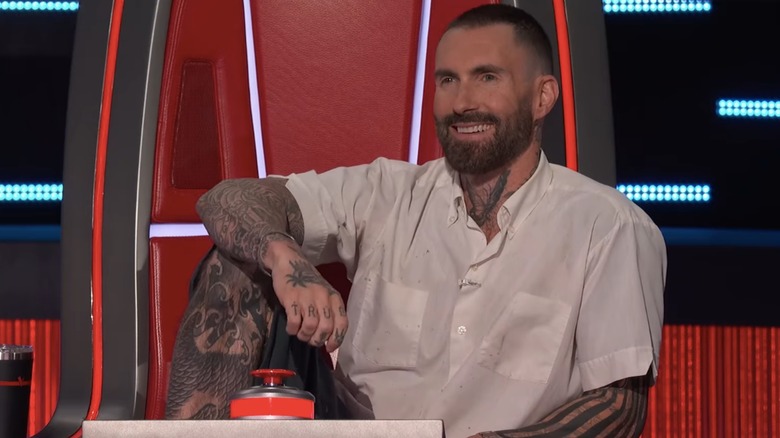
The result is a round where momentum could matter as much as reputation. A singer who has been impressive across multiple performances may look like a safe choice, but a memorable Cut Week performance could make another contestant difficult to ignore. Coaches must weigh what they have already seen against what each artist can deliver when the opportunity to advance is immediately at stake.
The format also puts the spotlight on the coaches themselves. Clarkson, Levine, Latifah, and Green will each have to choose two artists for automatic advancement before evaluating the remaining five. That means each coach must decide not only who has the strongest overall case, but who deserves to avoid the additional performance battle. Their selections will reveal something about what each coach values most at this stage of the competition.
For Clarkson, the challenge involves managing a team with three four-chair turn artists alongside several other contestants who have made it through the Battles. Levine faces a different balance, with Mikkel and Stephens carrying that audition distinction while the rest of his roster brings its own possibilities. Latifah and Green must make equally consequential decisions, and neither team’s two four-chair turn artists can be considered guaranteed selections simply because they attracted early attention.
There is also an important distinction between advancing directly and surviving the final team decision. Under the announced format, the five artists who do not receive an automatic place must compete for one additional spot chosen by their coach. That creates a second chance for performers who are not selected immediately, but it also means that several contestants will leave the competition before the Live Shows begin.
Once the coaches have selected their finalists, the audience will get a chance to influence the final lineup. America’s vote will send one additional singer into the Live Shows, bringing the Top 13 together. That public save adds a new dimension to the competition because a contestant’s appeal beyond the coaches’ individual preferences could become decisive.
The timing makes the transition even more significant. Cut Week is scheduled for Monday, November 2, from 9 to 11 p.m. ET/PT on NBC, with the episode available on Peacock the following day. The Live Shows are then scheduled to begin November 9, when audience voting will become a central part of the competition.
For viewers, the new structure offers a different way to evaluate the singers they have followed since the Blind Auditions. Rather than focusing only on who attracted the most chairs or won a memorable Battle, they will have to consider which artists are developing, which performances leave a lasting impression, and which contestants have the potential to connect with a live audience.
The four-chair turn distinction will remain an interesting talking point, particularly with Clarkson leading the group in that category. But the number of chairs that turned weeks ago cannot settle the debate over who deserves to advance now. The contestants still have to perform, the coaches still have to make their choices, and the audience will ultimately have a say in the final lineup.
In my view, that is the most intriguing part of Season 30’s Cut Week. The format creates a genuine opportunity for an overlooked contestant to change the conversation, while even a heavily praised audition artist must prove that the initial excitement can translate into another strong performance. The established favorites may still advance, but they cannot rely on their early success alone.
With nine four-chair turn artists among the contestants heading into this pivotal round, which singers will turn that early promise into a place in the Live Shows? And should the coaches prioritize the artists who impressed them most at the Blind Auditions, or the contestants who have shown the greatest growth since then?