Imagine coming face-to-face with a venomous cobra. Its hood expands, its body rises from the ground, and it prepares to defend itself. For most small mammals, this would be a signal to escape immediately.
But the honey badger is no ordinary animal.
Despite its relatively small size, this remarkable predator is capable of hunting some of the most dangerous snakes on Earth. Even more astonishing is its ability to survive certain venomous bites that could kill other mammals.
What makes the honey badger so difficult to defeat? The answer lies in a fascinating combination of physical strength, defensive adaptations and millions of years of evolution.
Meet One of Nature’s Toughest Survivors
The honey badger, scientifically known as Mellivora capensis, is found across parts of Africa, the Middle East and Asia.
Although it resembles a small bear, it belongs to the mustelid family, which also includes otters, weasels and wolverines.
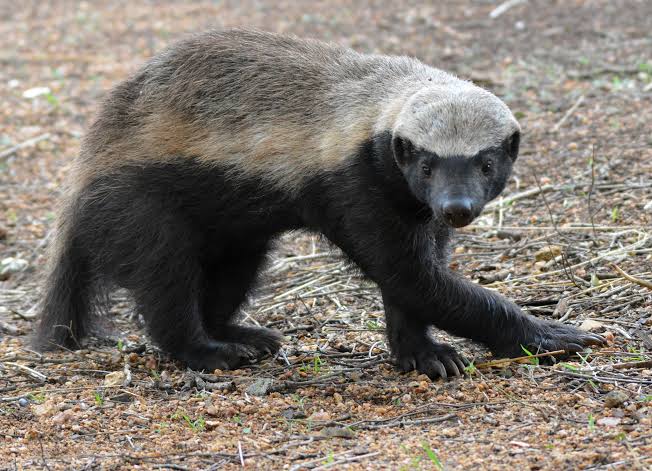
Its distinctive black body, broad grey-white back, muscular build and powerful claws make it instantly recognisable.
Honey badgers have earned a reputation for confronting animals considerably larger than themselves, including lions, leopards and hyenas.
However, their encounters with venomous snakes are among the most extraordinary examples of survival in the animal kingdom.
Honey Badger vs Cobra: A Battle Between Two Remarkable Animals
The cobra possesses one of nature’s most sophisticated defensive systems: venom.
Depending on the species, cobra venom can interfere with the nervous system, damage tissue and cause respiratory failure.
For many mammals, a serious venomous bite can have devastating consequences.
The honey badger, however, has evolved an unusual biological advantage. Certain components of snake venom are less effective against its nervous system than they are against those of many other mammals.
This makes venomous snakes a potential source of food rather than simply a threat to avoid.
In some studied populations, venomous snakes have accounted for a surprisingly significant proportion of the honey badger’s diet.
The Incredible Science Behind Its Venom Resistance
For years, scientists investigated how honey badgers could survive encounters with venomous snakes.
In 2015, researchers identified an extraordinary genetic adaptation involving a receptor responsible for communication between nerves and muscles.
Normally, certain snake neurotoxins attach to these receptors and interfere with the signals that allow muscles to function. In severe cases, this can lead to paralysis and breathing difficulties.
Honey badgers possess a genetic variation that makes it more difficult for certain neurotoxins to attach to their intended targets.
Further research published in 2021 experimentally supported this protective mechanism.
Imagine a key that normally fits perfectly into a lock. Evolution has effectively changed part of the honey badger’s lock, making the venom’s key less effective.
This remarkable adaptation helps explain why honey badgers can survive some encounters that would be fatal to other animals.
What Happens When a Cobra Bites a Honey Badger?
One of the biggest misconceptions about honey badgers is that they are completely immune to snake venom.
They are not.
A venomous bite can still cause serious symptoms, weakness, tissue damage and potentially death. The outcome depends on the snake species, the amount of venom delivered and the nature of the injury.
Wildlife observations have documented honey badgers surviving venomous snake bites, including encounters with highly dangerous African snakes.
However, survival is never guaranteed.
Their extraordinary resistance gives them a biological advantage, not invincibility.
Natural Armour: The Honey Badger’s Remarkable Skin
Venom resistance is not the honey badger’s only defence.
Its thick, relatively loose skin provides additional protection during encounters with predators.
Unlike animals with tightly fitted skin, the honey badger has considerable freedom of movement beneath its outer covering. This flexibility can help it escape an opponent’s grip.
Its muscular body and powerful claws also make it exceptionally capable of digging, defending itself and accessing prey hidden underground.
Combined with its determined behaviour, these characteristics make the honey badger a particularly challenging animal to overpower.
Why Would a Honey Badger Hunt Dangerous Snakes?
In the wild, finding food is a constant challenge.
Honey badgers are opportunistic omnivores with an incredibly varied diet. They consume rodents, insects, reptiles, eggs, fruit, honey and other available food sources.
Venomous snakes represent a valuable nutritional opportunity for an animal capable of hunting them.
Over countless generations, individuals with characteristics that improved their chances of surviving dangerous encounters could pass those advantages to their offspring.
Natural selection gradually shaped the remarkable animal we recognise today.
What appears to be extraordinary courage is also the product of evolutionary adaptation.
Is the Honey Badger the Only Animal Resistant to Snake Venom?
Surprisingly, no.
Mongooses, certain hedgehogs and pigs have also developed biological adaptations that reduce their susceptibility to particular snake neurotoxins.
What makes this discovery especially interesting is that these animals belong to different evolutionary lineages.
They independently developed comparable solutions to similar biological threats, a phenomenon known as convergent evolution.
Nature has effectively discovered different ways of solving the same survival problem.
The honey badger remains one of the most famous examples because of its reputation for confronting dangerous snakes.
Seven Incredible Honey Badger Facts
- Honey badgers belong to the same animal family as wolverines and otters.
- They possess natural resistance to certain snake neurotoxins.
- Their loose skin can help them escape the grip of larger predators.
- Their powerful claws make them exceptional diggers.
- They eat a remarkably diverse range of foods, including venomous snakes.
- They are primarily solitary animals.
- Despite their fearsome reputation, they can still be injured or killed by predators and venomous snakes.
Who Would Win: Honey Badger or Cobra?
The honey badger has several remarkable advantages, including physical strength, protective skin and resistance to certain venom components.
However, the cobra remains an exceptionally dangerous animal, and no encounter has a guaranteed outcome.
The species involved, their size, physical condition and surrounding circumstances all influence what happens.
What makes this wildlife clash so fascinating is not simply which animal wins, but how evolution has equipped two very different creatures with extraordinary abilities.
Final Thoughts
The honey badger is living proof that survival in the animal kingdom is not always determined by size.
Sometimes, the most powerful advantage is hidden deep within an animal’s genetic code.
Its ability to confront venomous snakes, withstand dangerous encounters and survive in challenging environments makes the honey badger one of nature’s most fascinating mammals.
It may not be invincible, but its remarkable adaptations have earned it a legendary reputation.
Follow Wildlife Clash for more extraordinary animal encounters, incredible wildlife facts and the fascinating science behind nature’s greatest battles.