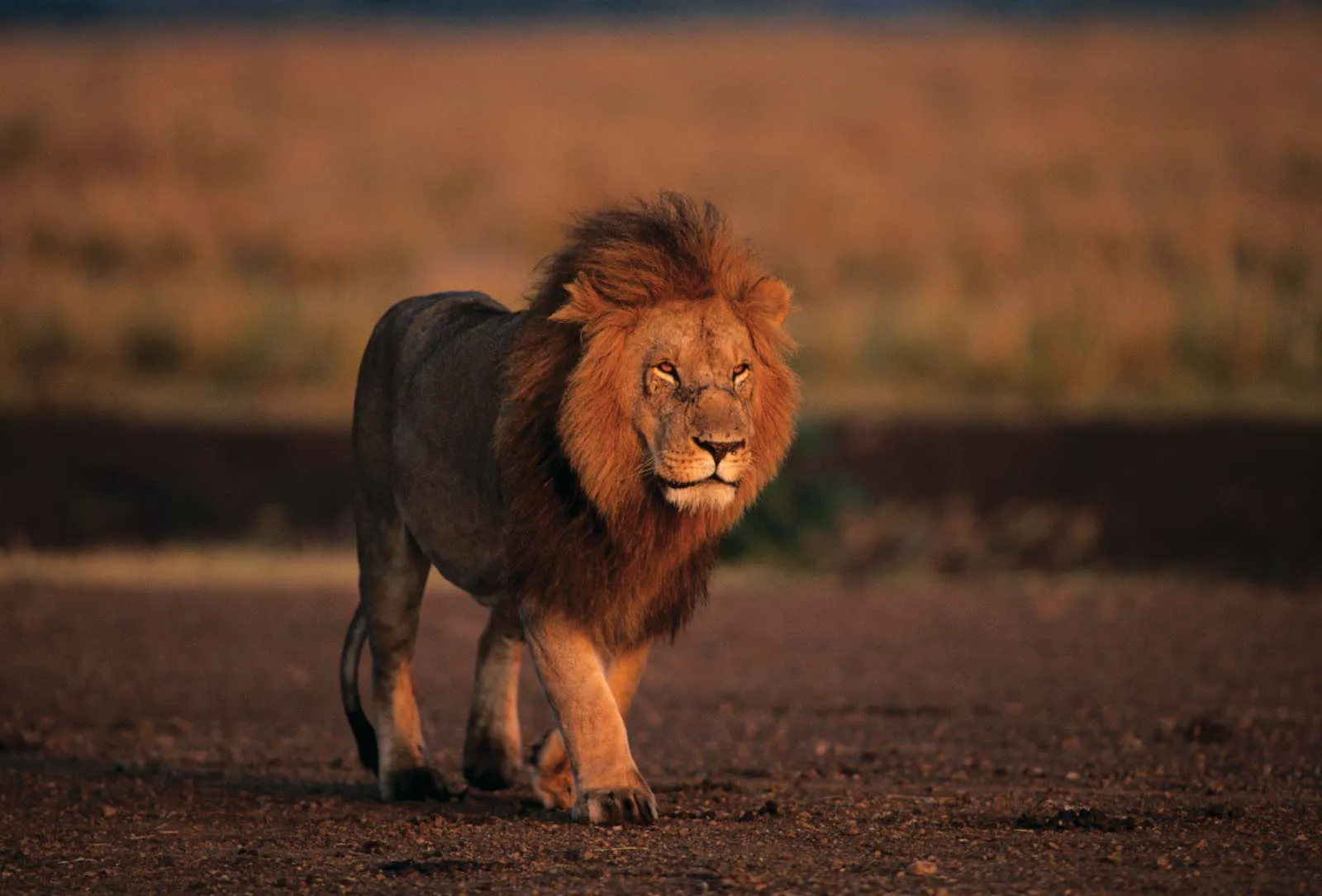
The African lion is one of the most powerful predators on Earth. Capable of bringing down zebras, wildebeests and even buffalo, it sits comfortably near the top of the African food chain.
But there is one surprisingly small animal that can turn a lion’s hunting expedition into a fatal mistake: the porcupine.
Without powerful jaws, extraordinary speed or razor-sharp claws, the porcupine possesses a remarkable natural defence capable of seriously injuring even the strongest predators.
Scientists have documented approximately 50 lions that were injured or killed following encounters with porcupines. Some of these encounters had consequences that extended far beyond the animal kingdom.
## Meet the Porcupine: Nature’s Walking Fortress
The African crested porcupine, scientifically known as *Hystrix cristata*, is one of the largest rodents in the world.
Despite its relatively modest size compared with a lion, it possesses an extraordinary protective covering of sharp quills.
These quills are made from keratin, the same protein found in human hair and fingernails. However, their structure makes them considerably more effective as a defensive barrier.
Some of its longer quills can exceed 30 centimetres in length.
Unlike lions, porcupines do not depend on hunting other animals to survive. Their diet consists primarily of roots, bulbs, bark, fruit and other plant material.
Their remarkable defence system exists primarily to keep predators away.
## What Happens When a Lion Attacks a Porcupine?
A lion approaching a porcupine faces a very different challenge from hunting a zebra or antelope.
When threatened, a porcupine raises its quills, making itself appear larger and more intimidating. It may also stamp its feet and rattle specialised hollow quills to produce a warning sound.
If the predator refuses to retreat, physical contact can cause sharp quills to become embedded in its body.
A lion’s strength offers little protection against these puncture wounds.
What initially appears to be an easy meal can quickly become a dangerous encounter, forcing the predator to abandon its hunt.
## Can a Porcupine Really Kill a Lion?
Yes. Although such outcomes are not guaranteed, fatal encounters have been scientifically documented.
A 2019 study published in the Journal of East African Natural History examined historical records of interactions between lions and porcupines across Africa.
The researchers identified approximately 50 lions that had suffered injuries or died following these encounters, including at least ten documented fatalities.
The danger does not necessarily end when the animals separate.
Embedded quills can cause prolonged pain, inflammation and serious infections. An injured lion may struggle to move, hunt or consume food.
For a wild predator that depends on its physical condition to survive, even a relatively small injury can have devastating long-term consequences.
In some cases, death may result from infection or starvation rather than the initial encounter itself.
## The Myth That Porcupines Can Shoot Their Quills
One of the most widespread misconceptions about porcupines is that they can launch their quills through the air.
In reality, porcupines cannot shoot their quills.
Instead, the quills detach through physical contact. This remarkable adaptation allows the porcupine to escape while leaving its attacker with a painful reminder of the encounter.
Porcupines can also grow replacement quills after losing them.
Their defensive system is an extraordinary example of how evolution can protect an animal without requiring it to overpower its enemies.
## Why Do Lions Hunt Porcupines Despite the Danger?
If porcupines are so dangerous, why would a lion attempt to hunt one?
The answer often comes down to food availability.
Lions generally prefer larger prey, which provides considerably more food for the energy invested in hunting.
However, drought, habitat changes and declining populations of herbivores can reduce the availability of their preferred prey.
In challenging environments, lions may increasingly rely on smaller animals, including porcupines.
Hunting is never without risk. When food becomes scarce, the balance between potential reward and danger changes.
A porcupine that might normally be ignored can become an important opportunity for survival.
Unfortunately, that opportunity can come at a considerable cost.
## Why Young Male Lions Are Particularly Vulnerable
Researchers investigating lion and porcupine encounters discovered another interesting pattern: young male lions appeared particularly vulnerable to quill injuries.
Young males often leave their original prides as they mature. During this period, they may travel independently while searching for territory and opportunities to establish themselves.
Unlike experienced lions living within established prides, these younger animals may lack both hunting experience and social support.
Living independently also means that an injured lion has fewer opportunities to benefit from the assistance of other pride members.
Researchers have noted that lions living together can sometimes help remove embedded quills from one another.
For a solitary lion, recovering from an injury can be considerably more difficult.
## The Surprising Connection Between Porcupines and Man-Eating Lions
Perhaps the most extraordinary discovery involves the relationship between porcupine injuries and human-wildlife conflict.
In 1965, a lion in Kenya became known as the Man-Eater of Darajani.
Years later, scientists examined its remains using modern medical imaging technology and discovered evidence of a severe porcupine-related injury.
Researchers also examined another lion from the same period that had suffered a serious dental injury involving a porcupine quill.
The examinations revealed evidence of infection and damage that could have interfered with normal hunting and feeding.
Scientists suggested that these injuries may have contributed to the lions changing their hunting behaviour.
An injured predator that can no longer successfully capture its usual prey may begin searching for more accessible alternatives, potentially including livestock or humans.
However, injuries are only one possible factor behind such behaviour. Environmental pressures, prey shortages and human encroachment can also contribute to conflict.
This discovery demonstrates how an encounter between two wild animals can have unexpected consequences for surrounding communities.
## Seven Incredible Facts About Porcupines
1. Porcupines are rodents, not members of the hedgehog family.
2. Some African porcupine quills can exceed 30 centimetres in length.
3. Their quills are made from keratin, the same material found in human fingernails.
4. Porcupines cannot shoot their quills through the air.
5. Lost quills can gradually grow back.
6. African crested porcupines are primarily nocturnal.
7. Their defensive adaptations can protect them against lions, leopards, hyenas and other powerful predators.
## Lion vs Porcupine: Who Would Win?
| Characteristics | African lion | African crested porcupine |
|—|—|—|
| Approximate adult weight | 110–250 kg | 10–30 kg |
| Diet | Carnivore | Primarily herbivore |
| Primary advantage | Strength and hunting ability | Protective quills |
| Social behaviour | Often lives in prides | Often lives in family groups |
| Activity | Frequently active at night | Primarily nocturnal |
| Survival strategy | Predation | Defence and deterrence |
In terms of physical strength, the lion has an overwhelming advantage.
However, the porcupine does not need to defeat the lion through strength. It simply needs to make the encounter too dangerous for the predator to continue.
Lions can successfully hunt porcupines, but the risks make every encounter unpredictable.
For the porcupine, escaping alive is a victory.
## Nature’s Greatest Lesson: Size Isn’t Everything
The battle between a lion and a porcupine demonstrates one of the most fascinating principles of the natural world.
Survival is not always determined by strength, speed or size.
Sometimes, a highly specialised defensive adaptation can be more valuable than enormous physical power.
The porcupine has evolved a remarkable solution to the problem of living alongside dangerous predators. Its quills allow it to survive in environments inhabited by animals many times its size.
Even the mighty African lion must respect this extraordinary defence.
In the wild, being the strongest animal does not mean being invincible.
**Follow Wildlife Clash for more incredible animal battles, extraordinary survival stories and fascinating discoveries from the natural world.**