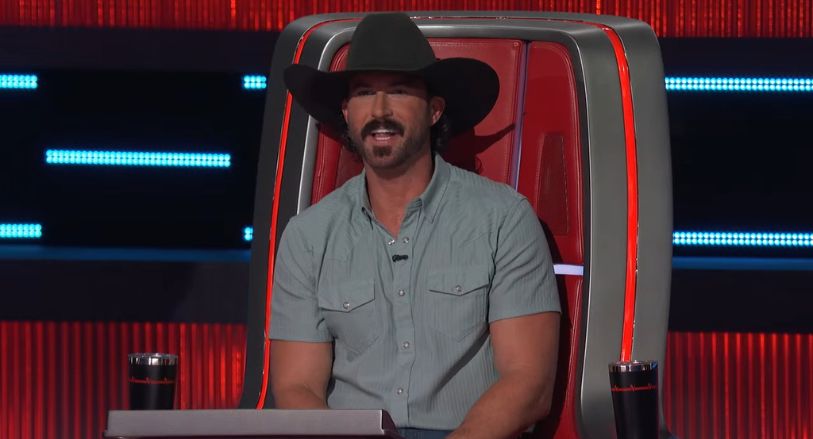
Behind every memorable performance on The Voice, there is often a personal story that viewers never get to see. For 35-year-old Cade Mower, the opportunity to compete on Season 30 has come with a sacrifice that has been far more difficult than learning songs or facing the judges: spending long stretches away from his wife and two young children. The Utah singer is getting closer to his dream of becoming a full-time musician, but he has also discovered something important about what matters most when the cameras stop rolling.
Mower, who comes from Bluffdale, Utah, has spent approximately 15 years pursuing music while maintaining a career outside the entertainment industry. He currently works in finance, performs regularly, and is also a husband and father. That combination has required him to balance several responsibilities, making his appearance on The Voice a particularly meaningful opportunity.
His story is different from that of a teenager entering a singing competition with dreams of becoming famous. Mower has already spent years performing in bars, developing his musical identity, and learning what it takes to entertain an audience. He knows how unpredictable the music business can be, and he has built a life around both his professional responsibilities and his passion for performing.

But joining The Voice meant temporarily stepping away from the people who have supported him throughout that journey.
During an interview with the Deseret News, Mower opened up about the emotional difficulty of being away from his wife, Lindsey, and their two children, who were just two years old and one year old during the filming period. He explained that he had spent two of the previous five months in Los Angeles, sometimes being away for 30 days at a time.
For someone with such young children, those stretches were particularly painful.
“I was heartbroken, to be honest,” Mower admitted while discussing the experience.
He explained that the distance was difficult to put into words, especially because he was missing everyday moments with his family while trying to pursue an opportunity that could change his musical future.
However, Mower also described how the experience changed his approach to fatherhood.

Rather than allowing the time away to become something that simply created frustration, he said he began making a conscious effort to be completely present whenever he returned home. He described taking the emotional pain of being separated from his family and turning it into a stronger appreciation for the time they had together.
That perspective may be one of the most meaningful parts of his entire Voice journey.
Mower explained that being away from his children made him recognize that the quality of the time he spends with them is just as important as the amount of time they have together. It encouraged him to become more intentional about family life rather than allowing work and other responsibilities to distract him.
It is an unexpectedly personal lesson to emerge from a national singing competition, but it helps explain why this opportunity means so much to him.
His wife has also played an enormous role in making his musical ambitions possible. In fact, without Lindsey’s encouragement, Mower’s journey toward becoming a professional musician might have taken a very different direction.
The couple first met in Austin, Texas, after Mower moved there to immerse himself in the city’s music scene. Lindsey was working as a server at a venue where he performed, and their relationship developed while he continued pursuing opportunities as a musician.
Eventually, Mower began considering another major move.
He wanted to relocate to Nashville, Tennessee, a city closely associated with the country music industry, so he could develop his career and learn more about the business. But moving meant asking Lindsey to leave behind the life they had established in Texas.
It was a significant decision, especially because Mower had recently purchased a house.
When he finally shared his plans with Lindsey, her response surprised him. Instead of expressing hesitation, she essentially told him that she was already on board and ready to go.
Her encouragement gave him the confidence to take the next step.
The financial consequences were not insignificant. Mower eventually sold the house at a loss and spent additional money relocating to Nashville, but he has never regretted the decision.
That move became another important chapter in a musical journey that had already included thousands of performances.
Mower’s relationship with music began long before The Voice entered the picture. He started playing guitar as a teenager and began singing shortly before turning 21. His earliest regular performances took place at his uncle’s bar, Club 48, in Murray, Utah.
He remembered how his uncle gave him opportunities to perform even when he was still learning how to handle an audience. The payments were modest, but the experience helped him develop the confidence and skills that would eventually become essential to his career.
He later moved to Austin, where he continued performing and developing his musical identity before eventually relocating to Nashville.
Throughout those years, he never abandoned music, even while maintaining a full-time career to support his family.
That determination eventually brought him to The Voice.

His Blind Audition became one of the standout moments of Season 30. Performing Zach Bryan’s “Something in the Orange,” Mower earned a four-chair turn from Kelly Clarkson, Adam Levine, Queen Latifah, and Riley Green. The performance also attracted more than three million views on the show’s official YouTube channel, giving him significant exposure beyond the television audience.
For Mower, the reaction was more than simply an exciting television moment. It represented validation after years of balancing music with other responsibilities.
He ultimately chose Team Riley, believing Green would understand the kind of country music he wanted to make.
The coach’s confidence in him became especially important during the Battle Round, when Mower faced Brayden Howell in a performance of the Red Clay Strays’ “Wondering Why.” Green eventually selected Mower to advance, despite acknowledging that both singers had considerable potential.
Interestingly, Mower later admitted that he wasn’t particularly satisfied with his own performance. He felt the arrangement and last-minute adjustments had prevented him from showcasing his strongest qualities.
But Green recognized something beyond the mistakes Mower believed he had made.

The country singer praised his contestant for understanding his own musical identity and knowing what he did well. That observation connects directly to Mower’s philosophy about performing.
He doesn’t want to become someone who relies on complicated vocal tricks simply to impress an audience.
“I know what I am, I know what I’m not,” Mower explained. He believes his strength lies in singing songs naturally, communicating their emotions, and allowing his own personality to come through rather than attempting unnecessary vocal acrobatics.
That approach may also explain why viewers connected with his original audition. His performance didn’t feel like an attempt to imitate another singer. Instead, he appeared comfortable telling a musical story in his own way.
Now that he has secured his place in the Live Shows, Mower has another opportunity to demonstrate those qualities.
He also believes The Voice has already opened doors that could have taken years to reach otherwise. The exposure has helped him connect with people in the music industry, introduced him to new opportunities, and reignited his motivation to pursue music more seriously.
For someone who has spent so much of his adult life balancing a regular job with musical ambitions, that encouragement is significant.
Still, his story isn’t simply about chasing fame or finally getting recognition. It is also about the people who made the journey possible and the personal sacrifices required to follow a dream without abandoning family responsibilities.

Personally, that is what makes Mower’s story particularly compelling. His success on The Voice matters, but the way he has used the difficult experience of being away from his children to become more present when he returns home says just as much about him as any performance could.
The Live Shows will give him another opportunity to impress America, but he already seems to have gained something valuable from the experience regardless of the final result.
Do you think Cade Mower has what it takes to become the Season 30 winner? And has his story as a father balancing family life with a lifelong musical dream made you appreciate his performances even more?