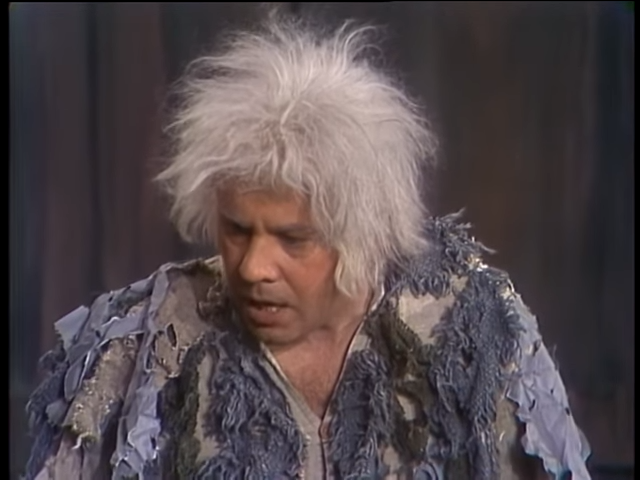
There are comedy moments — and then there are legendary comedy moments. For a generation of viewers, the “Galley Slaves” sketch from The Carol Burnett Show belongs firmly in the second category. In that skit, Tim Conway revisited his beloved character The Oldest Man — a figure defined by impossibly slow movements, absurd timing, and a trademark shuffle that turned physical comedy into art.
From the moment the scene opened, you could tell this wasn’t going to be ordinary. The set: a grim, claustrophobic slave galley — oars, chains, sweat, and despair. And then The Oldest Man appears: rumpled wig, droopy eyes, body moving slower than molasses. In the chaos of yells, orders, and frantic rowing, he simply … shuffled. One foot in front of the other. No hurry. No urgency. Just a man who refused — or couldn’t — move quickly. That juxtaposition already began to draw laughter out of the audience’s stomachs. But it wasn’t just the slow motion. It was what came next.
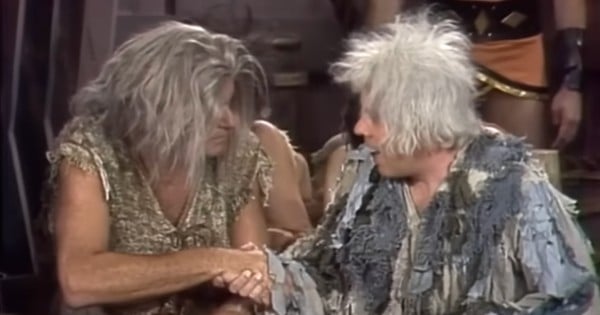
As his fellow “slaves” pretended to row furiously, under threat of lashes, The Oldest Man’s pace didn’t budge. He shouted out wrong commands, banged his oar against the wrong rhythm, and responded to cries for help with exaggerated, painfully slow reactions. Every mistake was met with deadpan logic and exaggerated helplessness. The result: a crescendo of chaos that couldn’t help but break the tension — and the audience — with laughter. That’s the genius of Conway’s comedic timing: he never rushed. He let the absurdity build slowly, allowing every tiny mis-step, every delay, every blank look to land harder.
And it worked. Spectacularly.
Because part of what makes “Galley Slaves” unforgettable isn’t just the laughs. It’s how it holds a mirror up — a grotesque, absurd mirror — to hurry, to fear, to desperation. Among swords, threats, and terror, The Oldest Man becomes a kind of absurd rebellion against panic. He becomes the human outlier that refuses to comply — and in his refusal, he becomes our release valve. In a world that often demands instant reactions, his extreme slowness becomes radical, healing, and deeply human.

Over the years, fans have revisited that sketch time and time again, calling it “one of the greatest moments” not only of The Carol Burnett Show, but of television comedy ever. The memory of The Oldest Man’s shuffle, his absurd facial expressions, his unwavering calm under ridiculous pressure — it lives on decades later, still capable of cracking up a room.
And maybe that’s why the sketch still hits so hard. Because it isn’t trying to dazzle with flash or speed. It’s not about polished delivery or celebrity glamor. It’s about timing, patience, absurdity — and pure, human vulnerability disguised as comedy.
When the room erupted — when the laughter built until it felt like the walls might shake — it wasn’t because someone delivered a polished punchline. It was because someone dared to be slow. Someone dared to be silly. And by doing so, he reminded every viewer: sometimes laughter doesn’t come from chaos — it comes from calm. From delay. From the courage to be imperfectly human.
That’s the magic of The Oldest Man.
And that’s why, even now, “Galley Slaves” remains a timeless masterclass in comedy faithfulness, physical humor — and the beauty of being absolutely, hilariously, yourself.