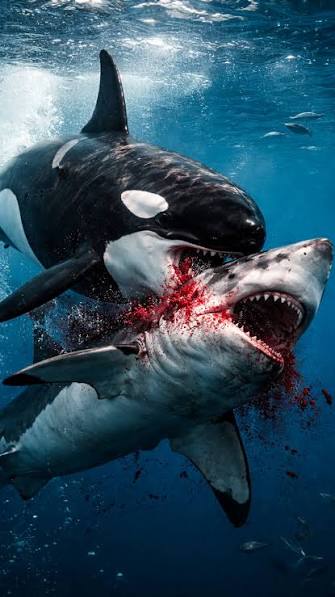
For generations, the great white shark has been portrayed as the ultimate ocean predator. With its powerful jaws, exceptional senses and enormous physical strength, few marine animals pose a serious threat to it.
But there is one predator capable of disrupting its entire hunting territory: the orca.
Also known as the killer whale, the orca possesses a combination of intelligence, strength and social behaviour that makes it one of the most formidable hunters in the natural world.
Scientists have discovered that the presence of orcas can dramatically change the behaviour of great white sharks.
The Ocean’s Ultimate Predator
Despite their name, killer whales are actually the largest members of the dolphin family.
Adult male orcas can reach approximately nine metres in length and weigh several tonnes. Their intelligence and sophisticated social structures distinguish them from many other marine predators.
Different orca populations have developed specialised feeding habits. Some primarily hunt fish, while others target seals, whales and sharks.
These behaviours can be passed between generations, creating distinct hunting traditions within different populations.
Great white sharks, by comparison, generally hunt independently.
Why Great White Sharks Abandon Their Hunting Grounds
Research published in 2019 examined